-->

Theme Layout

Boxed or Wide or Framed

Theme Translation

Display Featured Slider

Featured Slider Styles

Display Grid Slider

Grid Slider Styles

Display Trending Posts

Display Author Bio

Display Instagram Footer

Dark or Light Style

Powered by Blogger.

Comments system

top navigation

Labels

Pages

Menu

Pages - Menu

Popular Posts

Blog Archive

Showing posts with label Indigenous. Show all posts
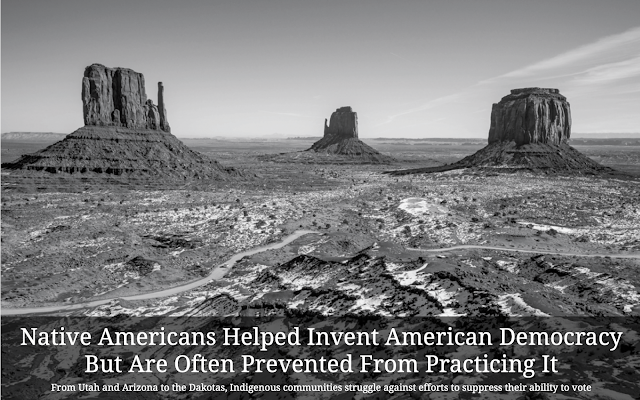
Fundamental Laws and Navajo Voting

Fundamental Laws and Navajo Voting


My latest at Sierra Magazine. Photo: Dustin Wero

"Many Diné I have spoken to over the years have expressed hope that the revival of the Fundamental Law offers us a way to reconnect to the wisdom of our ancestors. Another hope is that our non-Native neighbors and fellow US citizens might find a way to learn from the example of our long-standing values. Among those lessons is the connection between right relationships among people and right relationships to place.
'These lands offer a form of healing that we want people to accept so we can live in harmony together,' Willie Grayeyes once told me, expressing his hope that dominant, white culture might find 'a more harmonious approach than just hit-and-run.'"

My latest article for Sierra Magazine.


Check out my Patreon page, I'll be adding photos of my trip across the Navajo Nation while doing the reporting for this piece. Thank you to Sierra Magazine for supporting my work. 


Continue Reading
jfkeeler
0 Comments

You Might Also Like

Native Women Rule: The 'Town Destroyer' vs. the Clan Mother

Native Women Rule: The 'Town Destroyer' vs. the Clan Mother


Reps. Deb Haaland (Laguna Pueblo-NM) and Sharice Davids (Ho-Chunk-WI) at an event celebrating their swearing-in to Congress (Creative Commons non-commercial license)
Historian Colin G. Calloway, author of “Indian World of George Washington The First President the First Americans & the Birth of the Nation,” writes, “Washington knew what history has forgotten: Indian nations still dominated large areas of the North American continent.” And consequently, “Washington’s entire Indian policy and his vision for the nation depended on the acquisition of Indian lands.” He was himself a land speculator, trained as a surveyor and “he looked on Indian lands with a surveyor’s eye for the rest of his life.”

The dismemberment of Native nations’ lands for the acquisition of resources, and the erasure of thousands of years of lived human history they once contained, is still active U.S.policy today. One of President Trump’s first acts in office was to sign an executive order reauthorizing the hard-fought Dakota Access pipeline that had brought more than ten thousand Native Americans and their allies to the northern border of the Standing Rock Sioux reservation in North Dakota to stand off against a heavily militarized response by the state of North Dakota and the pipeline builder Texas-based Energy Transfer Partners. He was declaring that Native lands and concerns would not stand in the way of money-making ventures that sought America’s “energy dominance” of the world that would “make American great again.” Trump’s obsession with rolling back hard-fought protections of Native lands won during his predecessor’s administration was once again emphasized in December 2017 when he signed another executive order reducing the Bears Ears National Monument in Utah by 85 percent. The reduction of the monument, proposed by the five tribes and meant to be co-managed with them, puts at risk over 100,000 archaeological sites documenting 10,000-years of human history on the land. These sites include cliff dwellings, kivas, graves, villages, stone towers and more.

“It's all about power, greed, and money and how much oil can we extract from Mother Earth,” said Rebecca Ortega of Santa Clara Pueblo in New Mexico who was in Washington DC to see the January 3 swearing-in of the very first two Native American congresswomen in U.S. history, Reps. Deb Haaland (D-NM) and Sharice Davids (D-Kansas). “And I really think that you know Pueblo women, as well as Native American women, you know we all know what we need. And we need our lands protected, we need our families to feel secure.”

In their newly minted offices crammed with Native people and in the city named for “father of his country” George Washington, it is instructive to look at the road that grew out of Washington’s decision to pursue total war against unarmed Native American women and children to secure a win in the Revolutionary War. This resulted in the deaths of thousands of defenseless Native women, children, and elders in some 40 villages whose were allied with the British and whose men were away, engaged in raids on the borders of their lands. Their alliance with the British was spurred on by the colonists themselves who had been streaming into their lands for decades, squatting on their lands to turn into private property. Washington sent several American regiments under the command of Major General Sullivan to lay waste to these villages throughout western New York destroying their foods and homes including 1,600,000 bushels of corn. Washington already had a reputation of resorting to his kind of “warfare” considered a war crime today. The Iroquois or Haudenosaunee “the people of the Longhouse,” as they called themselves, had given him the sobriquet Conotocarious or “Town Destroyer” in 1753, a name also given to his great-grandfather John Washington after the murder of five Algonquin chiefs under a flag of truce. In 1755, the future U.S. president even signed a letter to Oneida leaders (one of the six nations that comprise the Iroquois Confederacy) using the name.

An 18th c. portrait of a Mohawk woman (Getty Images)
On the National Endowment for the Humanities website, historian Sarah Pearsall vividly describes a solitary Iroquois elder confronting the Continental Army laying waste to her village, “Madam Sacho must have emerged from the smoke like a ghost: startling, uncanny, and with a tale to tell.” The NEH’s website presently has a “Shutdown Notice” banner across the top warning that during the shutdown, their website will not be maintained while the president holds the government hostage for a wall that will keep out migrants and refugees from south of the border, many of whom are Indigenous people.

Madam Sacho, or as the soldiers variously called her “a very old Squaw,” “helpless, impotent wretch,” “antediluvian hag,” was utterly alone, everyone else had fled and the corn was still standing tall in the fields. The Continental Army was “taking the war home to the enemy to break their morale,” as Washington described what would today brand him as a war criminal.

The Haudenosaunee are composed of six nations (Mohawk, Seneca, Cayuga, Onondaga, Oneida, and Tuscarora), ruled by the Great Law of Peace, and the leaders were chosen not by white men of property as would be the case in the new republic, but by clan mothers, women who were leaders of their respective clans from which descent was traced matrilineally. Perhaps this “antediluvian hag,” as the soldiers called Sacho was just such a clan mother. It seems unlikely the people would have left her behind lightly, it must have been her choice — her choice to face the town destroyers alone.

My father’s Dakota people have stories of warriors of the Kit Fox Society who would stake themselves into the ground and fight refusing to budge even onto death. And yet, she did not fight; the elder addressed the enemy, she took advantage of their dismissal of her as a "helpless, impotent wretch” and gave them false intel, misdirecting their search, and possibly gaining time for younger women and children to escape.

“Sharice [Davids] and Deb [Haaland] coming to the Congress makes me think about our past,” Wilfred Cleveland, Ho-chunk Tribal Chairman says standing next to Ho-chunk tribal member Rep. Davids’ desk, “our relationship with the Mother Earth. And how in the home, the mother is the one that keeps the home fires burning, so to speak, and that in this day and age, the way the government is — although the government is a non-Native type of governing — it's still through the years they realize that because of dealings with Mother Earth it goes back to the relationship of woman… of the woman in the home.”

In the Declaration of Independence, King George III is accused of having “excited domestic Insurrections amongst us, and has endeavored to bring on the Inhabitants of our Frontiers, the merciless Indian Savages, whose known Rule of Warfare, is an undistinguished Destruction, of all Ages, Sexes, and Conditions.” Knowing Washington also engaged in this tactic the declaration can be more clearly seen as not entirely immune to the use of selective facts for propaganda purposes. The King did enforce the terms of the treaty that ended what Americans call the French and Indian War, and what in Europe is called the Seven Years’ War. A war begun by the colonists’ incursions into Indian land, and which triggers the first world war, what historians call World War Zero, doubled Britains national debt, and which the hated taxes were meant to pay for. And it was begun when a Virginia raiding party under the command of a very young George Washington led to the death of a French diplomat in western Pennsylvania. The “taxation without representation” was to pay for that debt and British force to prevent further colonists’ incursions into Indian land that could further beggar the British treasury.

Today, the U.S. maintains a military budget that dwarfs that of most of the world. And the response as seen at Standing Rock to Native nations demanding consultation on development that might harm their people’s drinking water and attempts to invoke treaties signed with the U.S. provoked a substantial military response. It is clear the land is still held by military force and to extract profit and nothing else.

“I stand with the tribes on the Chaco Canyon issue. They want a buffer around the monument,” newly sworn-in Rep. Deb Haaland told me in an interview her first full day on the job, “I will do whatever I can to stop drilling and fracking in Chaco Canyon before they sign leases with fossil fuel industries. That’s my ancestral homeland. It’s not unlike what the folks at Standing Rock did to protect their water. That’s their ancestral homeland. I hope I bring a new voice to that issue. I traveled to Bears Ears in September before my election and because I felt like I needed to be there and know what I would be fighting for. It’s apparent that in those areas there are so many treasures we do need to protect.”

Continue Reading
jfkeeler
0 Comments

You Might Also Like

Constitution Day: George Washington, World War Zero & "Taxation Without Representation"

Constitution Day: George Washington, World War Zero & "Taxation Without Representation"


For Constitution Day, September 17, 2018, an Indigenous Reading of History:

   Some history behind the Revolutionary War phrase "taxation without representation." Britain taxed the colonies to pay for the wars they were starting on the frontiers trying to take Indian land. 
A young George Washington.
   This was the impetus for the Seven Years' War (known in US history books as the French and Indian War) that was actually begun by a young Virginia officer named George Washington who signed an admission in French (which he couldn't read) after being defeated by the French in an engagement that said he executed a French diplomat. This began the first World War and spread far beyond western Pennsylvania to the Caribbean, Europe and even Southeast Asia. 

   Historians often call it World War Zero. It doubled the British national debt (and laid the foundations for the British Empire
—Washington was the father of two great nations), hence the tax on the colonialists. It was due to their own land lust. 

   And if you read the Declaration of Independence Thomas Jefferson lists amongst the colonists' grievances King George III's siding with the tribes ("merciless Indian Savages") and his protection of their lands through the Proclamation of 1763 which forbade colonists settling west of the Appalachian mountains. 


Continue Reading
jfkeeler
0 Comments

You Might Also Like

As A Dakota, I Am Shocked Any American Handed A Headdress Would Wear One

As A Dakota, I Am Shocked Any American Handed A Headdress Would Wear One


Originally published in XOJane. I was also interviewed about this in June by MTV: Here's Why You Shouldn't Wear a Native American Headdress.

While I appreciate Pharrell Williams’ 15-word apology last week for posing on the cover of Elle UK in a headdress precious to my people, I wonder how is this still happening? How can he NOT know how Native American people feel about the misuse of our culture?

From my MTV interview on Pharrell's Appropriation
I am shocked that any American handed a headdress would wear it. The headdress represents our leaders who were hunted down and murdered by the U.S. military of this country. It is not a fashion accessory it is an honor and a symbol of the sovereignty of the Plains tribes and the authority vested in the people to choose their own leaders. It should only be worn in circumstances that a head of state would participate in as a representative of these nations. This headdress should NOT be worn when posing for a fashion magazine cover next to titles screaming out details of Keira Knightly’s love life.

There are photos at the Smithsonian of my ancestor Owl Man wearing his headdress when he met President Andrew Johnson at the White House in 1868. As a Dakota, I would never presume to wear this regalia and even tribal members who have been so honored would never wear it on the cover of a fashion magazine.

Saswe Deloria (Owl Man) at the White House with Yankton Dakota delegation in 1868. Small man on balcony, President Andrew Johnson. Miami tribal delegates on balcony on the left of the picture.
And yet, when Native people speak out they are often met by claims of Native ancestry by those who are disrespecting our heritage. Whether it is Washington Redsk*ns fans, Chief Wahoo supporters, celebrities appropriating our culture for glamour shots or hipsters at art festivals, it’s always the same claim: “But I am part Native.” This notion that some fabled Native ancestry allows Americans of all colors some right to our cultural heritage and a voice that exceeds actual citizens of Native Nations underscores so much of the dialogue.

In this case, outrage over Pharrell’s misuse of regalia was met with outcries that he is part Native American thus it should not be an issue. Despite the fact that even if an enrolled member of a tribe who had earned the headdress wore it on the cover of a fashion magazine they would be lambasted for it by their own people. It’s simply not appropriate.

This focus on ancestry reflects United States’ policy of measuring our blood quantum as a way of reducing our numbers—another pathway to eventual elimination of the indigenous population. The hope was that we would all eventually have too little “blood” to qualify for citizenship in our own nations and tribes would then disappear and trouble U.S. claims to the land no longer.

It also demonstrates complete ignorance of our actual political status as citizens of our respective nations—all 566 of them. These nations are still sovereign and exist within the borders of the United States. They still retain jurisdiction over their lands and the states within whose borders they lay have no jurisdiction over them or right to tax because our nations occupy a status higher than that of states. We are sovereign nations that persist within the United States and much of U.S. policy has been guided by an interest in masking that reality. Some of our nations issue passports that their citizens can travel with internationally.

So, being Native American means being a citizen of a nation that pre-existed the establishment of the United States. You either are one or you are not. There is no “part” citizen of the United States, is there?

The taking of our identity, our regalia, the silencing of our voices, our point of view, is fully inline with the historical nature of the genocide of Native people that is the legacy of Manifest Destiny. This cultural taking also causes great damage to Native people. Our youth have to deal with folks like Pharrell and go through the complicated emotions of liking his music, wanting to feel represented by his art and then distanced by his stereotyping of their culture.

In the age of information literally at our fingertips I can’t believe Pharrell did not look at that headdress being offered to him by a British stylist and say, “Wait a minute. That doesn’t feel right.” And quickly research it on the Internet where in minutes he could find hundreds of articles written on the subject, many by actual Native Americans.
Continue Reading
jfkeeler
0 Comments

You Might Also Like

Thanksgiving, Hope and the Hidden Heart of Evil

Thanksgiving, Hope and the Hidden Heart of Evil


This is a piece I wrote. When a writer begins writing they don't necessarily know what is going to come out. On that day, in a kitchen in Berkeley, this is what came out of me. I'd like to say "I wrote that" or "these are my thoughts", but in some way writing to me is like alchemy. It is a mix of stuff you don't always know consciously. The magic that is family stories, heritage, experience are what come out. What does it mean to be a "Native American"? Well, I feel this piece went some way in finding that answer for me.

Happy Thanksgiving, enjoy.
- JK


I celebrate the holiday of Thanksgiving.

This may surprise those people who wonder what Native Americans think of this official U.S. celebration of the survival of early arrivals in a European invasion that culminated in the death of 10 to 30 million native people.

Thanksgiving to me has never been about Pilgrims. When I was six, my mother, a woman of the Dineh nation, told my sister and me not to sing "Land of the Pilgrim's pride" in "America the Beautiful." Our people, she said, had been here much longer and taken much better care of the land. We were to sing "Land of the Indian's pride" instead.

I was proud to sing the new lyrics in school, but I sang softly. It was enough for me to know the difference. At six, I felt I had learned something very important. As a child of a Native American family, you are part of a very select group of survivors, and I learned that my family possessed some "inside" knowledge of what really happened when those poor, tired masses came to our homes.

When the Pilgrims came to Plymouth Rock, they were poor and hungry -- half of them died within a few months from disease and hunger. When Squanto, a Wampanoag man, found them, they were in a pitiful state. He spoke English, having traveled to Europe, and took pity on them. Their English crops had failed. The native people fed them through the winter and taught them how to grow their food.

These were not merely "friendly Indians." They had already experienced European slave traders raiding their villages for a hundred years or so, and they were wary -- but it was their way to give freely to those who had nothing. Among many of our peoples, showing that you can give without holding back is the way to earn respect. Among the Dakota, my father's people, they say, when asked to give, "Are we not Dakota and alive?" It was believed that by giving there would be enough for all -- the exact opposite of the system we live in now, which is based on selling, not giving.

To the Pilgrims, and most English and European peoples, the Wampanoags were heathens, and of the Devil. They saw Squanto not as an equal but as an instrument of their God to help his chosen people, themselves.

Since that initial sharing, Native American food has spread around the world. Nearly 70 percent of all crops grown today were originally cultivated by Native American peoples. I sometimes wonder what they ate in Europe before they met us. Spaghetti without tomatoes? Meat and potatoes without potatoes? And at the "first Thanksgiving" the Wampanoags provided most of the food -- and signed a treaty granting Pilgrims the right to the land at Plymouth, the real reason for the first Thanksgiving.

What did the Europeans give in return? Within 20 years European disease and treachery had decimated the Wampanoags. Most diseases then came from animals that Europeans had domesticated. Cowpox from cows led to smallpox, one of the great killers of our people, spread through gifts of blankets used by infected Europeans. Some estimate that diseases accounted for a death toll reaching 90 percent in some Native American communities. By 1623, Mather the elder, a Pilgrim leader, was giving thanks to his God for destroying the heathen savages to make way "for a better growth," meaning his people.

In stories told by the Dakota people, an evil person always keeps his or her heart in a secret place separate from the body. The hero must find that secret place and destroy the heart in order to stop the evil.

I see, in the "First Thanksgiving" story, a hidden Pilgrim heart. The story of that heart is the real tale than needs to be told. What did it hold? Bigotry, hatred, greed, self-righteousness? We have seen the evil that it caused in the 350 years since. Genocide, environmental devastation, poverty, world wars, racism.

Where is the hero who will destroy that heart of evil? I believe it must be each of us. Indeed, when I give thanks this Thursday and I cook my native food, I will be thinking of this hidden heart and how my ancestors survived the evil it caused.

Because if we can survive, with our ability to share and to give intact, then the evil and the good will that met that Thanksgiving day in the land of the Wampanoag will have come full circle.

And the healing can begin.
Continue Reading
jfkeeler
3 Comments

You Might Also Like

Thanksgiving, Hope and the Hidden Heart of Evil

Thanksgiving, Hope and the Hidden Heart of Evil


This is a piece I wrote some years ago before I had children. I did, however, feel I was writing it for them as I sat with my editor pestering me with calls to get it done. Typing away at my laptop on our kitchen table in Berkeley I could feel myself addressing my unborn children. Strange, I know. Now that I have children, I am faced with the question, how does one explain these things to a child? My mother had taken the route in the consciousness-raising 1970's of filling me with stories about what had happened and allowing the chips fall where they may. I experienced as a child of five or so the first true feelings of political outrage. Outrage on behalf of a people, the poli. A feeling beyond my normal childish outrage at the loss of a toy or the singular attention of a parent. Outrage at not just the past, but the continued injustice of the basic fact of the invasion and the additional burden of living under the myth of American moral superiority. And I was filled with a desire to change that when I was just five. I think we forget, sometimes, the great wells of desire to do good that each of us are born with. I see this in my children all the time. My mother lit that fire in me as she talked to me about the stolen land, the Long Walk and smaller injustices as we washed dishes together over the kitchen sink in Denver. And those feelings have never been assuaged or lessened-- as I wish they might have been by now. Now, when I tell my daughter who is six, as I am in this piece, and who looks and talks so much like me at that age, I see the same tightening of the tiny fists and that same look of determination coming over her young, bright eyes. And I wonder, is it right to tell her? But how long could I keep up the lie?

So, here it is, my ode to the holiday. Enjoy.


I celebrate the holiday of Thanksgiving.

This may surprise those people who wonder what Native Americans think of this official U.S. celebration of the survival of early arrivals in a European invasion that culminated in the death of 10 to 30 million native people.

Thanksgiving to me has never been about Pilgrims. When I was six, my mother, a woman of the Dineh nation, told my sister and me not to sing "Land of the Pilgrim's pride" in "America the Beautiful." Our people, she said, had been here much longer and taken much better care of the land. We were to sing "Land of the Indian's pride" instead.

I was proud to sing the new lyrics in school, but I sang softly. It was enough for me to know the difference. At six, I felt I had learned something very important. As a child of a Native American family, you are part of a very select group of survivors, and I learned that my family possessed some "inside" knowledge of what really happened when those poor, tired masses came to our homes.

When the Pilgrims came to Plymouth Rock, they were poor and hungry -- half of them died within a few months from disease and hunger. When Squanto, a Wampanoag man, found them, they were in a pitiful state. He spoke English, having traveled to Europe, and took pity on them. Their English crops had failed. The native people fed them through the winter and taught them how to grow their food.

These were not merely "friendly Indians." They had already experienced European slave traders raiding their villages for a hundred years or so, and they were wary -- but it was their way to give freely to those who had nothing. Among many of our peoples, showing that you can give without holding back is the way to earn respect. Among the Dakota, my father's people, they say, when asked to give, "Are we not Dakota and alive?" It was believed that by giving there would be enough for all -- the exact opposite of the system we live in now, which is based on selling, not giving.

To the Pilgrims, and most English and European peoples, the Wampanoags were heathens, and of the Devil. They saw Squanto not as an equal but as an instrument of their God to help his chosen people, themselves.

Since that initial sharing, Native American food has spread around the world. Nearly 70 percent of all crops grown today were originally cultivated by Native American peoples. I sometimes wonder what they ate in Europe before they met us. Spaghetti without tomatoes? Meat and potatoes without potatoes? And at the "first Thanksgiving" the Wampanoags provided most of the food -- and signed a treaty granting Pilgrims the right to the land at Plymouth, the real reason for the first Thanksgiving.

What did the Europeans give in return? Within 20 years European disease and treachery had decimated the Wampanoags. Most diseases then came from animals that Europeans had domesticated. Cowpox from cows led to smallpox, one of the great killers of our people, spread through gifts of blankets used by infected Europeans. Some estimate that diseases accounted for a death toll reaching 90 percent in some Native American communities. By 1623, Mather the elder, a Puritan leader, was giving thanks to his God for destroying the heathen savages to make way "for a better growth," meaning his people.

In stories told by the Dakota people, an evil person always keeps his or her heart in a secret place separate from the body. The hero must find that secret place and destroy the heart in order to stop the evil.

I see, in the "First Thanksgiving" story, a hidden Pilgrim heart. The story of that heart is the real tale than needs to be told. What did it hold? Bigotry, hatred, greed, self-righteousness? We have seen the evil that it caused in the 350 years since. Genocide, environmental devastation, poverty, world wars, racism.

Where is the hero who will destroy that heart of evil? I believe it must be each of us. Indeed, when I give thanks this Thursday and I cook my native food, I will be thinking of this hidden heart and how my ancestors survived the evil it caused.

Because if we can survive, with our ability to share and to give intact, then the evil and the good will that met that Thanksgiving day in the land of the Wampanoag will have come full circle.

And the healing can begin.

Continue Reading
jfkeeler
5 Comments

You Might Also Like

Census Bureau update says 2.4 million Indians

Census Bureau update says 2.4 million Indians


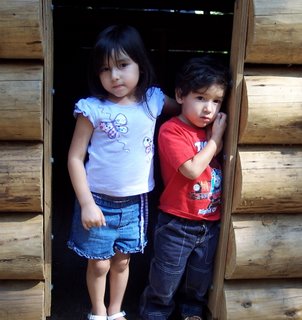
Part of the recent 10% growth per year of Native Americans in the United States, my two little ones. Their tribe? The Nava-Sioux-Mohawkian-Seneca-Tuscarora-Cayuga one.

At Indianz.com the article Census Bureau update provides look at Indian Country caught my eye. It says there are 2.4 million Indian people counted. 4.2 million if you count mixed-race Native Americans, although, why are we (I am 13/16th's American Indian) counted separately? Or are you only counted separately if you mark two boxes? Being 3/16th's European ancestry means I generally don't do that, but what the heck? It says that the four largest tribal affiliations named were: Cherokee (310,000), Navajo (294,000), and Sioux (120,000), and Ojibwe (115,00). I had no idea there were so many Ojibwe. I know a lot of Navajos get mad that they have lost their place as "the largest tribe" to the recent increase in Cherokee Nation enrollments. Many Americans have been tracing their lineage and taking greater pride in their Indian ancestry (it's no longer the skeleton in the closet). Consequently, enrollment in most of the Five Civilized Tribes does not require blood quantums which is enlightened for this day and age we live in. I think all tribes should do that. We're not prized poodles now are we? We're people. We mix. Although, Navajos still have far and away the most tribal members who speak their own language (nearly half of all Native language speakers are Navajo) as a first language. But let's hope someday we can all have that again. Even me. My Navajo is a source of constant humor to my relatives.

Navajo numbers may also be diminished by Navajo unwillingness to be counted. My friend Rob Nez, who worked as a Census worker on the rez was greeted by a shotgun when he tried to count some homes out in the middle of nowhere. So, he just guessed how many people were there. But still, being Navajo and Sioux, I have to say that's a lot of relatives! Perhaps, not as many as my husband's Kelly clan from County Claire, Ireland, but close! The Kelly's, now that's one big tribe!
Continue Reading
jfkeeler
1 Comments

You Might Also Like

Fire Thunder Impeachment and the Rights of Women

Fire Thunder Impeachment and the Rights of Women


I begin to realize more and more how out of step I am with the majority of Native Americans. The thin veneer of Native American activist, liberal, or educated Indigenous folk, like myself, have done much to promote the idea of an enlightened Indigenous tradition that was lost to U.S. imperialism. But now, faced with the impeachment of the Oglala Sioux Tribal President Cecelia Fire Thunder in South Dakota for doing nothing more than proposing a Planned Parenthood clinic on her own land calls into question the assumptions that I have long held about my own people.

President Fire Thunder stood up for a woman’s right to choose under the flag of tribal sovereignty in opposition to the state of South Dakota's new anti-abortion law, which outlaws abortion even in the case of rape or incest. Tribal sovereignty as it exists now under U.S. constitutional law arises out of an 1831 Supreme Court ruling that determined the legal status of tribes to be “domestic dependent nations.” It laid the precedent that states, occupying a lower tier than tribes could not exert jurisdiction over these “domestic dependent nations."  The federal government alone enjoys this power.

In addition to impeaching the president, the Oglala Tribal council went one step further than the state of South Dakota -- not only making abortion illegal, but they made seeking an abortion or helping someone find an abortion punishable by banishment from the reservation. So, if a young woman is a victim of incest or rape and seeks help from another woman to find an abortion clinic, she and her friend would be banished. Meanwhile, the tribal council resists efforts to deal as stringently with the issue of rape, incest, and violence against women, so the men who perpetuate rape are not similarly punished.

When I say “my own people," I must clarify that I am not Oglala Lakota, but a Navajo tribal member and my father is Yankton Dakota Sioux. My father's tribe is a member of what was once called in history books as The Great Sioux Nation, which included the Tetons as well, of which, the Oglala are a subgroup. And I know, my dad's tribe located some 200 miles across the state of South Dakota are not so different from their cousins west of the Missouri River in cultural ideas and perceptions.

In the parlance of my mother's people I am "born for the Yankton Dakota," however, as we are matrilineal, I am considered to be fully a member of my mother's clan and people. Boys are considered only half-members, and traditionally, would grow up to live with their wife’s people and their children would be of her clan. The Sioux or Lakota/Dakota have always been more egalitarian in their approach to lineages. Living equally with one side or the other. Grandparents often followed their children and grandchildren and were called “child followers."  Like grandparents in any community, they enjoyed gushing about their little ones and not wanting to be parted from them followed them on long "Indian visits" from October until April to the in-law's encampment. Today, the United States government insists that parents from different tribes, like mine, can only enroll their children in one tribe. So my parents, after much soul-searching, chose to enroll my sisters and me in the Navajo tribe.

Despite the Federal designation, I have always felt a great affinity to my Yankton side. The writings of great-great aunt Ella Deloria were a revelation to me about what society could be and mean to the individual. She was fluent in all three dialects of Lakota/Dakota/Nakota (abbreviated LDN). My great-aunt interviewed elders in the early 20th century on LDN reservations in Montana, North Dakota, and South Dakota. She recorded their recollections of traditional culture in their own words and then translated them verbatim into English and then did a second translation retaining the idiomatic flavor. Her work has served as a solid foundation for future cultural scholars.

In college, her books were taught in my Native American studies courses. For my senior thesis, I sought out unpublished manuscripts held in collections at the University of South Dakota and the Southwest Museum of the American Indian in Los Angeles and the Dakota Indian Foundation in Chamberlain, South Dakota. My thesis was, quite naturally, on Yankton womanhood, and I made note of everything that would help me understand the role of women in Dakota society. I learned things about my culture that were no longer being taught. Later, when I participated in Lakota ceremonies, I duly noticed the differences, particularly in the role women played. Some of the changes were progressive, others painfully regressive.

I found that many of the leaders today of the Wiwang Wacipi, or Sundance as it is called in English, were not Lakota. They had become active in Lakota ceremonies after stints in prison or after hard-living had brought them to this way of life in order to forge a more emotionally honest and stable lifestyle. To be honest, some Lakota men and men of other tribes seemed to derive a lot of personal gain from participating. Not so much monetarily, but in personal power over followers and positions of prestige within their spiritual groups. It is somewhat similar to the guru position enjoyed by some traditional spiritual practitioners in India with similar New Age followers. The lack of knowledge of historical Lakota cultural structure meant that a lot of misinformation was spread and foisted upon these followers who were willing to put up with a lot to have an authentic Native American experience.

I found myself challenging these misconceptions with personal family stories and research. I was shocked that generally progressive feminist women were allowing themselves to be bullied by “tradition” into regressive roles. None of the participants had ever read any of my great-aunt’s writings. Although, some wicasa wakan (holy men) told me they had read and been inspired by the writings of her nephew Vine Deloria, Jr. Particularly, God Is Red: A Native View of Religion and Custer Died for Your Sins: An Indian Manifesto.

I know many women in different movements have encountered this experience. They join a movement and find themselves, despite their education and intellect being expected to make the coffee and clean the dishes while male leaders sit around and hold councils and reenact the old days. The modern feminist movement was born of this experience in the Civil Rights and the Free Speech movements. But progressive women seeking traditional Indigenous knowledge are at a distinct disadvantage. They can only, to a limited extent, bring their ideas of womanhood to the table and for the most part, must accede to the superior knowledge of the (most likely) male traditionalist.

My great aunt’s descriptions of Lakota life are eloquently encapsulated in two of her books, the ethnographic novel, Waterlily and another more polemical work Speaking of Indians more in the vein of her famous nephew. The first time I read Waterlily, I cried. I felt a profound loss for something I had never known. I had lost my place in a community to which I could have belonged entirely in a way, that I could not in this fractured, Anglo-centric society.

I remember in my Native American studies class, a white, male student who mocked the descriptions of Lakota society in Water Lily, saying that the author had to have made up such a perfect society since everyone knows Indian communities were unfair and brutal places to live. The professor, Elaine A. Jahner, who had edited a book on Ella Deloria’s translations and studied under her, stated simply and firmly, that nothing was made up. Everything was precisely as she had documented it.

But was everything as perfect as she documented it? There was even in earlier days, a reconstruction of Lakota society going on. A reinterpretation as seen in George Sword’s narratives and translated by Ella working for “the father of American anthropology” Franz Boas. George Sword was a Lakota man who was literate in Lakota and wrote these stories down between 1890 and 1910. Later, when Ella tried to verify the stories by going back to the reservations in the 1920s, no one could recall ever hearing the stories told that way before. He had reinvented them to fit the conventions of European fairytales. No one had ever told the stories that personified the sun and other figures of cosmology. It was a revolutionary development; something Sword pursued as a way of preserving the spirit of the stories yet translating them into new cultural idioms for future generations to enjoy.

Elaine Jahnner delighted in telling the story about an elder in Montana who was the last in her tribe to know the old stories. She visited her at the grandson’s request because his grandmother wouldn’t tell him the stories. He hoped that Jahnner, his teacher, would have better luck and be able to record the stories before his grandmother died. When she entered the grandmother’s cabin, she was given a book to read. This was a published account done years before of the tribe’s stories. She instructed Jahnner to read the book to her, and every time she disagreed with something in the book, she would bring her cane down on the floor and roughly poke Elaine with it.

Finally, she said, “No more! See? That’s why I won’t tell my stories! I’m going to die with them intact!”

Once, when I asked my uncle Vine Deloria, Jr., what his aunt had told him about the old traditions, he shook his head and told me that she wouldn’t tell him anything. She had said that she’d rather die with the information than have the next generation get it all wrong. She said that these things were so important to the elders she knew, and they held them so dear that it would be worse to see them misinterpreted than to see them die out completely.

I was utterly frustrated by this attitude. It was the opposite of the method of learning and education I had received in school. I talked to my relative, Phil Lane, Sr., my grandmother’s cousin, but who was more like a grandfather to me. My own grandfather had died when my dad was 15, so I never knew him. Often, traditionally, the mother’s brother is the one who plays the role of instructing his sister’s children. In the Navajo way, he is their clan relative, and of course, the father is not. Although my dad’s tribe is not matrilineal, the uncle still plays this role. So, in a way as my grandmother’s male relative, as her brothers were all dead, he was just fulfilling an age-old duty, being an uncle to my father and a lala (grandfather) to his children.

When I told him these stories that I had heard at school and how they had upset me, he just laughed. He explained to me that traditionally, they taught in a different way. It wasn’t like in school where everyone is taught the same things at the same time, whether they are ready for it or not. Each individual was evaluated by the elder, and then it was determined whether they should know a story or any sort of lesson. He also told me how it was considered extremely impolite to ask someone a question. You waited until they told you. You just figured if they wanted you to know they would tell you. If you really needed to know something that information would be revealed to you, by a vision, a teacher or through observing nature. So, the grandmother’s actions showed that she had judged her grandson not ready to know the stories and that she had confidence in future generations to discover those stories that were important to them on their own through methods available to them. This certainly made me feel better, but I still just wanted to know the traditions and have them told to me.

But, really, it was up on the hill on a vision quest fasting that I came to understand this way of thinking. Seeking a vision of my own, I came to understand how hard-won these insights were and how beloved the society was to those that had lost it. It was, as my great-aunt said, “A way of life that worked.” And I would add, for them because each generation must find their own way. Their own traditions that work for them at this time. Our elders wanted us to do it that way. We cannot as modern Lakota/Dakota or even Diné or American women be constrained by them. We can be informed by them, even inspired, but we must make decisions for our bodies, our future, our well-being that are sensible and that show that we value ourselves. We, as women, are more than our biology, we are more than just baby machines for a Lakota Nation, a Dakota Nation, or a Nakota Nation. We are productive members of society; we are the ones earning the college degrees, holding the jobs and are the ones, by and large, that must raise the children, earn wages to buy them shoes and pay for their futures. We must be the ones to be able to make these choices concerning our bodies.

It may be tradition to do this or that, according to this person or that, but we must look clearly at what future we are dealing our young women when we assign them this lot so early in life especially if that child is from rape or incest. Women are capable of knowing whether they have the resources to give a child a good life. Unless they are able to make that choice the continued cycle of grinding poverty will continue to spiral out of control. This is not about killing babies, but about growing strong families that have the resources to take care of each other. If we speak of a tradition that values life, we must also speak of a tradition that valued self-control. Lakota/Dakota/Nakota men were taught to control their sexual drive. Traditionally, a man was not a man unless he could control himself. A couple that had children closer than four years apart faced deep shame in the community. It was regarded and called “killing the child."  Children were supposed to be spaced four years apart, any less and you endangered the older child. It was a shame that stayed with the “killed child” for the rest of their lives. People who knew would look upon that child with pity. Even in old age, it would be remembered how the parents had disrespected their elder child.

So, when we talk about tradition, we must realize that it cannot work in bits and pieces. And that even if wholly intact, it may not work at all today. If women must not commit abortion, then Lakota men on the reservation must practice this traditional form of manhood and have strict control of their sexual drive. The reason women on the reservation face some of the highest rates of rape and incest in the country is because men, obviously, do not practice this. One gender cannot pay the price for a broken society. And we cannot ignore the real price women pay and that children pay raised in difficult circumstances. Raising children is no small feat. And periods of pregnancy and childbirth mark periods of the greatest economic stress for families in the United States on or off the reservation. Expectant parents in the United States are more likely to slide below the poverty level. Women in the workforce, educated or not, are more likely to face negative job performance reviews when they are pregnant.

Society punishes women for veering from the male norm. Asking women to bear children so that no Lakota fetus may be killed sounds noble, but does it change anything? The Oglala tribe resides in Shannon County, consistently ranked as the poorest county in the nation. Resources are scarce. Unemployment at 85%. Pregnancy reduces the chances of young women to get an education, provide for their children, and improve the economic status of future generations. Even for college-educated women, paying for childcare can be an expensive proposition and expecting grandma or some other female relative to stay home and watch the children is not always feasible as most of the tribal members who hold jobs on the reservation are female. Most of the college degrees held by tribal members are held by women. Yet, most of the tribal council is male.

There was a certain pragmatism to the old Lakota/Dakota/Nakota traditions perceptible in the harsh community condemnation of parents who bore children too close together. It is obvious that they valued the life that already exists more than that might be. That they held self-evident that parents and the community should do everything in their power to ensure the well-being of the children who already exist to not only survive but thrive. How is the Oglala Nation doing this today if they do not value the lives and potentiality of their women? Why are they willing to create a generation of "killed women"? Even of "killed children" as many of these young women are little more than children themselves? I am a mother, and I am raising two children. The effort and daily investment in each child is great even after only six years of motherhood. I value my children, and as such, I value their potential. I would never demand my daughter, as a teenager, bear a child of rape or incest. It would be devaluing her. It would be "killing" her because I am forcing into life another life before the present is able to bear it. This was something that our ancestors understood. Perhaps, better than we do now.

And if we create a society of our own, now, today that we love and enjoy and raise children who are beautiful and safe from harm, are we not truly then following in our ancestors' footsteps? Isn’t that really the kind of society they would have understood and valued? Isn’t that, after all, what they had hoped and prayed for in those tumultuous last days before the hoop was broken?
Continue Reading
jfkeeler
6 Comments

You Might Also Like