-->

Theme Layout

Boxed or Wide or Framed

Theme Translation

Display Featured Slider

Featured Slider Styles

Display Grid Slider

Grid Slider Styles

Display Trending Posts

Display Author Bio

Display Instagram Footer

Dark or Light Style

Powered by Blogger.

Comments system

top navigation

Labels

Pages

Menu

Pages - Menu

Popular Posts

Blog Archive

Showing posts with label Dakota. Show all posts
Star Quilts and Fire

Star Quilts and Fire


Both of my grandmothers: Diné and Dakota, a rug weaver and a star quilt maker (via @jfkeeler Instagram )
The month began with a phone call informing us our storage unit had burned down. Picking through the remnants, I found the star quilt my grandmother had made for me when I graduated from high school. I had spent hours in college, wrapped in it to protect me from the cold New England forests far from our homeland in the Great Plains. 

Star Quilt in similar colors to mine (MSU Museum)

Later, when my grandmother came to my graduation, she fretted about not being able to see the horizon And so, we climbed Bartlett Tower but when we got to the top hoping to see more, the trees still owned the vistas, and all we gained from our perch was a view of the unending canopy with an occasional white spire poking through. We said nothing. I recall a bit of a catch in her breath as we gazed, the only expression of an oddly bitter disappointment we both felt. It was then that I realized we are big sky people. People of the Plains, we have long been accustomed to sending our spirits out in all the directions almost as a prayer or even, an extension of ourselves. Hemmed in by the dark green we were only able to send our spirits up to a tiny patch of blue. It felt we like we could not breathe. 

But just as I prefer to remember my grandmother as she was then, still alive, her curiosity about the world a companion to my own, and, despite the story above, she was generally a cheerful person, I prefer my memories of the blanket as it was whole. Standing in that burned out unit, I found myself unwilling to take a brightly colored scrap of triangles smelling of smoke and blackened around the edges even as the man who worked there badgered us to take the things we wanted before they cleaned it out. 

Lakota grandmother hand quilting a star quilt. (Co-nnect.Me)
As a child, one of my earliest memories is of climbing the steep stairs to her workroom where she kept a large wooden frame she used to stretch out her quilts and hand stitch them. As a child as I emerged at the top of the stairs which smelled strongly of the hard industrial rubber that covered it to prevent slipping and combined with the smells of my grandmother's cooking wafting up from the kitchen below,  I wobbled amazed at my discovery of this magical place. A place that in my childish mind was one of mystery and power with star quilts in many colors draped and in various states of completion. 

But I know fire can be purifying and can carry our prayers. When I was executive director of the California Indian Basketweavers Association, I learned how the tribes there used to burn the forest to keep it healthy and giving the roots and shoots necessary for basketweaving a chance to grow. So, I felt inclined to give up these material possessions to the fire and hope for new shoots. 

In my heart, the blanket is with my kuŋ´ŝi now in heaven where her laughter can be heard over the camp circle of our ancestors' tipis enjoying a sly joke with her relatives. My mother used to describe her mother-in-law’s laughter sounding like the “tinkling of bells.” So I find myself when I think of the bit of star quilt left in this world, stopping and listening for her laughter and feeling fortunate to be her granddaughter.
Continue Reading
jfkeeler
0 Comments

You Might Also Like

Dakota Kinship & Trump's America of "Carnage"

Dakota Kinship & Trump's America of "Carnage"


Ihanktonwan (Yankton) Family 
My 16-year old daughter was pretty unhappy today about Trump's inauguration. She was supposed to go to a rally with her friends but became overwhelmed and despondant. I realized I couldn't make her happy by simply a heart-to-heart about what Trump's election means to our Native American family. In fact, to anyone American who is not white. So, instead I decided to read her a chapter from my great-great Aunt Ella Deloria's book "Speaking of Indians." The title of the chapter is "A Scheme of Life that Worked: Kinship's Role in Dakota Life." The book was published in 1944 but I feel it still held truths that would be relevant today in 2017.

My great-great Aunt Ella Deloria
My aunt opens the chapter saying, "All peoples who live communally must first find some way to get along harmoniously and with a measure of decency and order. This is a universal problem...The Dakota people found a way: it was through kinship."

The beauty of this way of life she recounts, this vision of how humans can—and did—live together had a healing effect on my daughter. She was laughing and smiling by the end of the chapter. (My aunt ends the chapter with a funny joke.) And I was thankful to my aunt once again. Her words remembering what we once were, 'Odakota' as she calls it, drove away the despair this society had filled my daughter with, driven as it is by division and polarizing self-interest.

Ihanktonwan Camp in 1882
I remember asking my Uncle Vine Deloria if Aunt Ella told him everything she knew (I had heard there were things she did not share with the younger generations) and he told me that she had not. He said some of these things were just too precious to be passed on in some malformed way and losing our way of life, which our elders loved so much, was so painful that passing it on in some twisted form, well, they could not bear that. I thought about this for a long time and several years later, I came to the conclusion that our ancestors had confidence we could find our way back again. That we could rediscover this "way of life that works" for us today. Coming together, as we have at Standing Rock, bringing the bits together each of our families still have of the previous society that once filled our ancestors with such joy, is the start. And it will grow. Even under Trump. It will not be denied.
Continue Reading
jfkeeler
0 Comments

You Might Also Like

Why Character Matters in Native American Leaders


On Facebook I shared this photo of my dad with the following caption:

My dad always said in traditional Dakota culture any man who tried to garner support--"run for office" if you...
Posted by Jacqueline Keeler on Tuesday, April 5, 2016


Politics, the way it's constructed, it attracts a certain type and that's across the board--all creeds, all cultures. To counteract this we should be more actively recruiting the sort of person who would not push themselves to the forefront. This was the kind that in our traditional Dakota/Lakota societies that would be chosen.

My father was once chosen this way. I remember at an election for the White Buffalo Council in Denver, my dad stood in the back of the room. His was his usual silent, introspective self, leaning against the wall, surveying the crowd deep in his own thoughts. And I suppose for our Indian people still waters run deep because the next thing we knew my dad had been elected as Vice Chair by the entire crown before us without even running.

As a child, this stayed with me. My father was in character so different than the candidate who offers himself up and glad-hands his way to power.

Indeed, politics attracts the entitled. Research shows less qualified male candidates are more likely to put themselves forward to run than more qualified female candidates. The whole process of becoming a candidate is so tied to the ego of the individual that the system elevates those that feel particularly entitled to power.

As happens on Facebook, a relative, my grandmother's cousin Sam Deloria gave me some feedback on my perhaps too romantic rendering of our Dakota culture. I thought the exchange is worth sharing:

Sam Deloria: In small social units it is easier to preserve this approach, but pretty hard in larger societies, where we don't really know the people. and where the media seem to be taking sides. 
Jacqueline Keeler: I think that's what I'm trying to figure out--a scalable approximation. 
Sam Deloria: A lot of the things I read seem to be to miss the importance of what can be done in smaller societies that can't be done in larger ones. Our constant bragging about ourselves overlook that we probably couldn't sustain those systems if we had larger, massive social units.
Jacqueline Keeler: I wonder sometimes if Cahokia was a cautionary tale. 
Sam Deloria: I suppose there is real scholarship on this issue that I am ignorant about. 
Jacqueline Keeler: That was partly said in jest. But I do think our traditional social order can provide insights that we cannot perceive otherwise. These are starting points for action not simply an end road to romanticism.
Continue Reading
jfkeeler
0 Comments

You Might Also Like

FSU Seminoles & Redface

FSU Seminoles & Redface


Thoughts after watching the FSU Rosebowl Game and seeing images of fans dressed up in chicken feather versions of our traditional Dakota/Lakota headdresses.


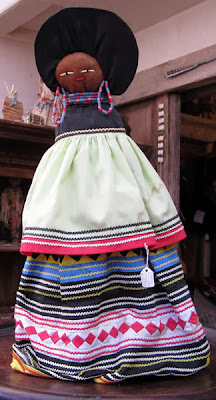
I remember when I was a kid, we'd go to powwows and my mom would run a Navajo fried bread stand. She would buy me dolls made by members of other tribes. She wanted to teach me that not all tribes are the same, that they each had their own ways & culture. I remember when I got a Seminole doll from a woman wearing the same beautiful, cascading ruffled dress as the doll. I stared at it for a long time. The dark brown cloth face with the face made of appliquéd beads. I knew it was an alien, foreign culture to my own Dakota or Diné one. I never thought the Seminole would support the misappropriation of my father's Dakota culture for money and gain or to simply appease their fellow Floridians. When I looked at that doll, I saw only the great multiplicity of what we Indian Nations are and could be.

Versus this:


Continue Reading
jfkeeler
1 Comments

You Might Also Like

On Veteran's Day: Chief White Swan on Warrior vs. Soldier

On Veteran's Day: Chief White Swan on Warrior vs. Soldier


Chief White Swan (Maga Ska), Yankton Dakota
I often think about the fundamental differences between the culture of my own people and that of the culture that found its way across the ocean from the Old Feudal World.  When I was Sundancing, the old men used to talk to us Sundancers a lot about the Lakota concept of being Ikce Wicasa; that is free, simple people.  It was a concept that took pride of place in our culture and stands in contrast to the Feudal system with the Lords on top of the pyramid and the multitude of Serfs on the bottom.  Their description of Ikce Wicasa reminded me a story my grandmother's Uncle Vine Deloria, Sr. used to tell about what Yankton Chief White Swan: it concerned the difference between being a Soldier and being a Dakota Warrior.  Soldiers follow orders in contrast to our Warriors who were truly Ikce Wicasa.  We didn't build great monuments or enthrone a few in gold, but we lived authentic lives as people and I believe that is the secret of our success as human beings as Dakota and Lakota.

Here is the story of "Soldiers versus Warriors" as told by Vine Deloria, Sr. from Remember Your Relatives: Yankton Sioux Images, 1851 to 1904 by Renee Sampson Flood and Shirley A. Bernie:

"You know . . . after the Minnesota Sioux War  [in 1862] . . . a lot of refugees [the Santee] came to live among the Yanktons [my dad's tribe].  The government had issued orders to General Sully to visit the Yanktons and remind them of their Treaty obligations.  He was to tell them that since the [United States] government was an ally of the Yanktons, the refugees should be treated as enemies.  General Sully held a council with the Yanktons and told them, 'I'm going to be gone about four months.  When I return I want you to tell me that they're gone.'  The Yanktons told themselves that these refugees were their relatives.  Why should we drive our own people out, they thought.  Later, Sully came back and said, 'Well, did you drive them out?'  The Yanktons told him they did not.  Then General Sully told them, 'Well, I'll tell you what I'll do.  I think that the President (Lincoln) is asking too much.  I'm going to be gone again, so during that time if you shoot one of these refugees, I'll report that theYanktons are allies.  They have killed the Isanti.'  Struck by the Ree came to my (great) grandfather (Francois des Lauriers) and asked him if he would do this.  My grandfather said, 'Yes, I suppose.  I've killed two Sioux and this will make a third.  I had that in a dream.  I saw four purification lodges in my vision.  At the end was a great big, black hawk.  And on the side was a big, white owl.  And they stood there.  They told me that by passing those purification lodges, I was going to kill four of our own people.  I've killed two and here is the third.  I'll kill him.'  So, he did.  When Sully returned, he came with two mule teams and a driver.  He sat up there on the back.  He said, 'Well, did you shoot one?'  Struck told him at had been done.  Then, Sully asked 'Who shot him?' Struck told him Deloria had shot the man.  Sully told him, 'Oh, I meant for one of you full bloods to do it.  Deloria is half French.  I'm going to go back and bring my soldiers to attack you.'  White Swan walked up to him.  He said, 'Tell this monster to get down.'  So Sully got down.  'Sully,' said White Swan, 'You're a fighting man and I'm a fighting man.  When your boys go into battle, you're on top of a big butte back there with your field glasses on, riding the fastest horse.  When there are enemies coming, I go without asking anybody to join me.  And my warriors look at each other and say, 'Get on your horses.  That darn fool will get himself killed.'  So they come thundering from behind.  When your soldiers are getting beat, and they try to run, you have them shot.  When some of my warriors get scared, and run, that's alright.  Maybe they'll be braver some other time.  So you select any gun, any weapon that you want and give me fifteen paces, and with these two knives, I'll dodge you all the way, and chop you Allll up.'  Then Sully told him that he didn't mean anything by what he had said and White Swan said, 'I don't know how you meant it!'  White Swan bluffed Sully down.  THAT was White Swan."

The authors add the following description of Chief White Swan

"After the war ended White Swan expressed his concern about what would be done with the captured Minnesota tribes.  When visitors came to his lodge, he kept them up half the night talking about current national events such as the Civil War.  Many of these people, both Indian and white, came away from their visits with him impressed by his keen intelligence and wit."

So, for Veteran's Day I had my children read this story passed down in our family for 150 yeas.  My dad served in the Army but had no love for it, reserving his true dedication and love for us, his family.  He was a lot like White Swan, who was the head man of the village our family was from.   A village that was later put under water by the dam at Fort Randall.  This summer, I took my children there and with their cousins they played in the water by the shore of the dam.  Life goes on, our people persist.


Continue Reading
jfkeeler
0 Comments

You Might Also Like

young Ella

young Ella


This is a picture of my great-great aunt, Ella Deloria. Also known as Anpetu Sa Win (Beautiful Day Woman). This was probably taken around 1915 when she was studying in New York City at Columbia Teacher's College and working with Franz Boas, the "father of American anthropology".

Here is one of my favorite quotes from her book Speaking of Indians:

Kinship was the all-important matter. Its demands and dictates for all phases of social life were relentless and exact; but, on the other hand, its privileges and honorings and rewarding prestige were not only tolerable but downright pleasant and desirable for all who conformed. By kinship all Dakota people were held together in a great relationship that was theoretically all-inclusive and co-extensive with the Dakota domain. Everyone who was born a Dakota belonged in it; nobody need be left outside.

This meant that the Dakota camp-circles were no haphazard assemblages of heterogeneous individuals. Ideally, nobody living there would be unattached. The most solitary member was sure to have at least one blood relatives, no matter how distant, through whose marriage connections he was automatically the relative of a host of people. For, in Dakota society, everyone shared affinal relatives, that is, relatives-through marriage, with his own relatives-through blood.

Before going further, I can safely say that the ultimate aim of Dakota life, stripped of accessories, was quite simple. One must obey kinship rules; one must be a good relative. No Dakota who has participated in that life will dispute that. In the last analysis every other consideration was secondary-- property, personal ambition, glory, good times, life itself. Without that aim and the constant struggle to attaint it, the people would no longer be Dakotas in truth. They would no longer even be human. To be a good Dakota, then, was to be humanized, civilized. And to be civilized was to keep the rules imposed by kinship for achieving civility, good manners, and a sense of responsibility toward every individual dealt with. Thus only was it possible to live communally with success; that is to say, with a minimum of friction and a maximum of good will.

Great-great aunt, Ella Deloria, Speaking of Indians, p 24-25.
Continue Reading
jfkeeler
0 Comments

You Might Also Like