-->

Theme Layout

Boxed or Wide or Framed

Theme Translation

Display Featured Slider

Featured Slider Styles

Display Grid Slider

Grid Slider Styles

Display Trending Posts

Display Author Bio

Display Instagram Footer

Dark or Light Style

Powered by Blogger.

Comments system

top navigation

Labels

Pages

Menu

Pages - Menu

Popular Posts

Blog Archive

Showing posts with label Lakota. Show all posts
Standing Rock & Sovereignty

Standing Rock & Sovereignty


Last night, I spoke at a 350PDX panel on Standing Rock and was asked to summarize what Standing Rock means to me and what my "lessons learned" were. I recalled a statement about Standing Rock made by my friend Joleen Brown (Oglala Lakota), editor of Native Hoop Magazine: "Even after everything they did to us—how they tried to damage us to make us lesser than we were...that we can still make a stand like this? When you see the two cultures facing off, I am so proud. You can clearly see which is the better culture."

I called Standing Rock a pilgrimage and I truly believe this to be true. A pilgrimage of heart and mind and a form of as we Dakota say "of voting with our feet." Everyone who is going there is casting a vote for the kind of society—world, even—they want to see and be a part of.

But it is also about sovereignty. And why does honoring the sovereignty matter? The sovereignty of the Great Sioux Nation or as we call it, the Oceti Sakowin (Seven Council Fires) and of the Standing Rock Sioux Tribe? Beyond the fact that without the sovereignty of our nations, treaties have no validity, diminishing, sidelining and/or co-opting our nation's sovereignty is no small thing.

Sovereignty cannot reside in a cult of personality—it must reside in systems that are accountable and transparent to all the people. The Standing Rock Sioux Tribe has methods of being held accountable (see here) but charismatic personalities do not. See the pictogram (right) for the problems with leadership vested solely in an individual and not an agreed-upon system of checks and balances clearly accountable to the people.

I posted these Facebook posts that explain my take on the maligning of Standing Rock Sioux tribal chairman Dave Archambault II:


Our people were not organized as feudal societies in Europe were with an autocratic leader who enforces his will through violence against his own people. Lakota/Dakota people were organized through specific respect relationships embodied in our kinship system. This was the main government we possessed. Disrespecting, ignoring and sidelining the leadership of elders and respect relatives is simply culturally alien to our culture, it is colonial in nature.

As my great-great aunt, Dakota ethnologist Ella Deloria noted in her 1944 book "Speaking of Indians":
"For the most part, then, everyone had his part to play and played it for the sake of his honor, all kinship duties, obligations, privileges, and honoring being reciprocal. One got as well as gave. Thus kinship had everybody in a fast net of interpersonal responsibility and made everybody like it, because its rewards were pleasant. There were fewer rebels against the system than you might think, since, as I have said, social standing and reputation hinged on it. Only those who kept the rules consistently and glad- good citizens of society, meaning persons of integrity and reliability. And that was practically all the government there was. It was what men lived by."
The use of colonial attitudes in the reemergence of the Oceti Sakowin would signal a very different nation or oyate than what we once were. Fundamentally different—in fact, not Dakota or Lakota, anymore. It would be a nation that would be some product of colonization. A change of this nature to our identity as people would have to be the result of a calm and reasoned discussion and be agreed upon by all the people of the Oceti Sakowin.

Which leads us to another fundamental aspect of Lakota/Dakota culture: consensus. We are not only not led by autocrats or charismatic leadership that makes its own rules, but we are ruled by consensus, a long, difficult but culturally-relevant process. Change either of these and you have a different people—a people who are no longer Lakota or Dakota except in name.

It saddens me that there is such division. Opening my email and I see a daily news brief from Grist and the lead story is about the infighting arising at Standing Rock. Once again, I turn to my great-great aunt's recollections of our kinship system to seek a remedy for this that is grounded in our culture and the strengths that it gave us a people whose leaders (who were a product of this system and utterly accountable to it) are admired and known the world over. Here she explains what she calls  "the kinship appeal":

"The kinship appeal was always a compelling force in any situation. If two normally decent acquaintances quarreled, for instance—and of course if they were acquaintances they were social relatives outsiders were deeply concerned over it until it was straightened out. The 'good men' felt it incumbent on them to restore peace and order by appealing to the quarreling ones through kinship. Peace is implied by the very name of the people, Odakota, a state or condition of peace; the 'O' is a locative prefix. 
'We Dakotas love peace within our borders. Peacemaking is our heritage. Even as children we settled our little fights through kinship that we might live in Odakota.' And with that, two of the most responsible and influential men would visit the unhappy ones and appeal to them to cool off their hearts for the sake of their relatives who were unhappy over their plight. And they did not go empty-handed. There must always be a token, an outward sign of great inner desire. The peacemakers went prepared to give a gift 'to cool off your heart and to show by it that we your kinsmen value your life far above mere chattel.' 
Such an appeal in kinship's name was supreme. It placed the responsibility for his relatives' peace of mind squarely on the troubled man, reminding, him that no Dakota lived unto himself alone; all were bound together in kinship. He might not rightly risk even his very own life needlessly, thereby bringing tears to the eyes of' his relatives especially his sisters and women cousins, to whom he owed the very highest respect and consideration. However slightly he valued himself, he must regard the relatives. And the quarreling men, unable to resist such an appeal, smoked the pipe together and were feasted before the council, and so the breach was healed. Friends, happy over the reconciliation and the restoration of peace, brought them more presents. And it was not in the least the intrinsic value of the gifts that mattered but what they symbolized: that the two were more precious to their relatives than mere things. And thus peace was restored in the camp circle to the relief of all."
Peace everyone. Peace and beauty (Hozho Nahasdlii'). 
Continue Reading
jfkeeler
0 Comments

You Might Also Like

Why Character Matters in Native American Leaders


On Facebook I shared this photo of my dad with the following caption:

My dad always said in traditional Dakota culture any man who tried to garner support--"run for office" if you...
Posted by Jacqueline Keeler on Tuesday, April 5, 2016


Politics, the way it's constructed, it attracts a certain type and that's across the board--all creeds, all cultures. To counteract this we should be more actively recruiting the sort of person who would not push themselves to the forefront. This was the kind that in our traditional Dakota/Lakota societies that would be chosen.

My father was once chosen this way. I remember at an election for the White Buffalo Council in Denver, my dad stood in the back of the room. His was his usual silent, introspective self, leaning against the wall, surveying the crowd deep in his own thoughts. And I suppose for our Indian people still waters run deep because the next thing we knew my dad had been elected as Vice Chair by the entire crown before us without even running.

As a child, this stayed with me. My father was in character so different than the candidate who offers himself up and glad-hands his way to power.

Indeed, politics attracts the entitled. Research shows less qualified male candidates are more likely to put themselves forward to run than more qualified female candidates. The whole process of becoming a candidate is so tied to the ego of the individual that the system elevates those that feel particularly entitled to power.

As happens on Facebook, a relative, my grandmother's cousin Sam Deloria gave me some feedback on my perhaps too romantic rendering of our Dakota culture. I thought the exchange is worth sharing:

Sam Deloria: In small social units it is easier to preserve this approach, but pretty hard in larger societies, where we don't really know the people. and where the media seem to be taking sides. 
Jacqueline Keeler: I think that's what I'm trying to figure out--a scalable approximation. 
Sam Deloria: A lot of the things I read seem to be to miss the importance of what can be done in smaller societies that can't be done in larger ones. Our constant bragging about ourselves overlook that we probably couldn't sustain those systems if we had larger, massive social units.
Jacqueline Keeler: I wonder sometimes if Cahokia was a cautionary tale. 
Sam Deloria: I suppose there is real scholarship on this issue that I am ignorant about. 
Jacqueline Keeler: That was partly said in jest. But I do think our traditional social order can provide insights that we cannot perceive otherwise. These are starting points for action not simply an end road to romanticism.
Continue Reading
jfkeeler
0 Comments

You Might Also Like

FSU Seminoles & Redface

FSU Seminoles & Redface


Thoughts after watching the FSU Rosebowl Game and seeing images of fans dressed up in chicken feather versions of our traditional Dakota/Lakota headdresses.


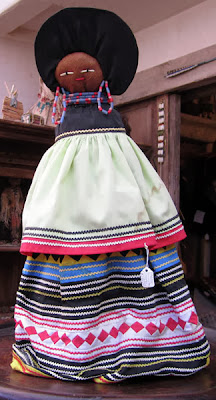
I remember when I was a kid, we'd go to powwows and my mom would run a Navajo fried bread stand. She would buy me dolls made by members of other tribes. She wanted to teach me that not all tribes are the same, that they each had their own ways & culture. I remember when I got a Seminole doll from a woman wearing the same beautiful, cascading ruffled dress as the doll. I stared at it for a long time. The dark brown cloth face with the face made of appliquéd beads. I knew it was an alien, foreign culture to my own Dakota or Diné one. I never thought the Seminole would support the misappropriation of my father's Dakota culture for money and gain or to simply appease their fellow Floridians. When I looked at that doll, I saw only the great multiplicity of what we Indian Nations are and could be.

Versus this:


Continue Reading
jfkeeler
1 Comments

You Might Also Like

THE BLACK HILLS AND STONE BOY: A NEW INTERPRETATION?

THE BLACK HILLS AND STONE BOY: A NEW INTERPRETATION?


Researching Ohunkaka stories--traditional Lakota/Dakota teaching stories that were taught to children to teach them social mores and morals, I found an old article I wrote about it years ago. It is very academic, but I think it was also published in Wicazo Sa (Red Pen) Review then edited by fellow Dakota Elizabeth Cook-Lynn. To show ever more how Dakota are related she immediately figured out how we were related, although she is from Crow Creek and my dad's family are Yankton. Her Uncle Theo had been married to my grandpa's cousin Julia Keeler and the house my grandmother lived in had once been theirs! Truly in the Dakota world we are all related!

Felix Brunot, Ihanktonwan Dakota Chief as a boy

THE BLACK HILLS AND STONE BOY: A NEW INTERPRETATION?
When we speak of "mitakuye oyasin" all my relatives, we know always
that the growing and moving things of the earth, the winged, the
four-legged, and the two legged are all children of the earth and they,
too, want to live.  So we say mitakuye oyasin.


- Black Elk


        I have used this quote because it explicitly verbalizes and puts us into the state of mind, which the ohunkaka demonstrates; a way of relating to our environment that is Lakota.  The traditional Lakota folk story, the ohunkaka is particularly suited for use in the political restructuring of the Lakota future, as it has embedded in it the symbology of culturally-specific features that could be used to redefine the Lakota relationship to its past and thus, redirect the perceived future of the people. As noted by Elaine Jahner in "Cognitive Style Oral Literature" the "Lakota ohunkaka function primarily as pedagogical means." The most recent, and perhaps, most explicitly political use of the Stone Boy (Inya Hok si), was seen in the prepared statements given by Charlotte Black Elk, Lakota Oral Historian, at the Sioux Nation Black Hills Act hearings held on Wednesday, July 16, 1986 at the U.S. Senate. In her testimony, Ms. Black Elk's states that her purpose is to show that "traditional Ikce (Lakota) philosophical principles and theological concepts for organizational design and management practice is one the Lakota have used for thousands of generations, and is still appropriate, particularly for the Black Hills."

Charlotte Black Elk

This need to reaffirm the Lakota peoples connection to the land — particularly to the Black Hills, through myth arose out of the attempts by the United States to negate the Lakota's claim through numerous practices. This has included the use of myth, in the sense that it is as a way of relating to a mutually agreed upon past history of a people. This myth written and propagated by Americans, rewrote the history of the Lakota and introduced them as recent denizens of the plains, and put their discovery of the Black Hills, the sacred Paha Sapa at about roughly the same time as that of European explorers like the Vendryes brothers, intrepid 18th century European pioneers of the Dakota territory.  As recorded by Emerson Hough in 1909, "The Sioux did not always live in Dakota, but once dwelt in South Carolina, where their remnants were cleaned up by the savage Iroquois even after the establishment of the English settlements on the Atlantic coast." Thomas Mails, biographer of Chief Frank Fools Crow, despite noting that Mr. Hough did not see fit to site any sources for this information, asserts that we should accept it in good faith as have many other experts of Sioux history.

This myth is far from dead today, this idea is being propagated by even popular commercial historians like James Michenor in his best-selling epic Centennial, published in 1974. He writes, "do not depict the plains Indians as having been for any great length of time in the locations where the white man discovered them.  Do not fall into the error of writing about white men intruding into areas which the Indian had held from time immemorial." He then goes on to assert that from 6,000 B.C. to 1750 A.D. the Great Plains were devoid of "permanently settled human beings," and he concludes that, "it must not be thought that they lived there. They were nomads, hunters who went wherever the Bison went and it was of no concern to them what type of land they lived on. THEY HAD NO HOME."
  
Of course, the power of this myth to limit or even possibly eliminate Lakota land claims to the Black Hills is obvious, and is fiercely contested by the Lakota themselves. Dr. David B. Miller, a professor of History at Black Hills State College, Spearfish, South Dakota draws the obvious legal question that the new American myth begs, "at what point in time does an historic seizure of land without just compensation become a moot point?" As the Chairperson of the Open Hills Association, a political organization that stands in opposition to the Sioux Nation Black Hills Act (the Bradley bill), he states, "opponents of the Bradley bill believe that the bill's supporters should offer traditional and historical evidence such as that offered by the Cheyenne for Bear Butte to substantiate Lakota claims for sacred aspects of the Black Hills."in its explicit use of the ohunkaka and other culture-specific features to directly address this question. The way in which she uses these thematic structures in such original new ways calls to mind the statements made by an earlier generation of Lakota to Lakota ethnologist Ella Deloria concerning the adaptations embodied in George Sword's storytelling: "tales were never told in that manner. We had tales treating of Ikto, Iya, the Owl Maker, the cold wizard, the old woman or witch, coyote, and these were personified as humans and besides them there was nothing." Ms. Black Elk may be particularly able to tackle this task; as she notes in her testimony, she is the great-granddaughter of the famous Lakota medicine man and visionary of Black Elk Speaks, as well as the great-granddaughter of Hollow Horn and a college graduate of the University of Colorado at Boulder.  "Sioux Treaty Hearings" held in Lincoln, Nebraska has never been so specific in its detail. Although, the ideas given form by the ohunkaka Black Elk recounts have been articulated by elders like the great medicine men Chief Frank Fools Crow. As recorded in his biography, "when Fools Crow said this same thing, and stooped down as he did so to grab a handful of South Dakota dirt . . . in the Sioux mind they have always been an integral part of the Plains country, and God created the first Sioux out of that very ground. To understand any of their religious and political views one must hold this fact in mind."

Thus, the testimony that Ms. Black Elk gives in the Sioux Nation Black Hills Act hearing accomplishes a number of things: 1) it establishes the antiquity of the Lakota claims and use of the land; 2) shows the relationship between the religious practices of the Lakota to particular locations within the Black Hills; 3) organizes the culture-specific features (oral history, myth, astronomy, and linguistical knowledge) of the Lakota in a European definitional fashion; and 4) then transposes this into a traditional Lakota teaching story, the ohunkaka for the non-Lakota U.S. Senate Select Committee. She begins this process by beginning from the beginning, the Lakota creation story in which the forces of life are personified in a manner similar to (and perhaps derived from) the work of George Sword and relationships are established between them and the Lakota people. This is the definitional lexicon that she begins with and then continues with a short linguistic study of various Lakota words and their relationship to the earth (Maka), and includes some astronomical and archaeological data. It is not until she has done all of this that she places these symbols within their proper context of the Lakota ohunkaka, infusing them with meaning and making these symbols accessible to not only the cultural cathexis of the Lakota people, but also the non-Lakota audience who will decide the fate of this bill. In this way, the ohunkaka fulfills it purpose and it links reality and narrative action by showing how specifically Lakota cognitive features apply to fictional conflicts and their resolutions."

Therefore what I will detail in the next few pages is the way in which Ms. Black Elk's version of the Stone Boy story defines "the relationships between constancy and change [to] reflect fundamental
social processes and interactional models"– basically, how she tailors the lexicon of Lakota symbology to fit the needs of a particular political position.  In doing this, she not only had to work within that lexicon, or circle of symbolic interaction, but without that circle and carry that meaning across cultural boundaries in order to make it intelligible to a European cultural milieu. Listing the variations in the story across five versions spanning in time nearly 100 years. I have ordered them (one through five) in the manner in which they are most greatly divergent from Ms. Black Elk's telling of the story. They are in many ways similar in their intent, that is the pursuit of timelessness, but are at the same time the products of their times.  

Placing it in relation to the Tagluzaza Topa, which she translates as "The Cleansing", an event similar to the "Great Flood" recounted by the Hebrew book Genesis. By doing so, she calls to mind the fact that this story occurred after a cataclysmic event and is part of a renewal of structures that have maintained the earth ever since that point. In none of the other versions cited (see chart, pages i - v) is such a reference found, it is, perhaps, assumed. The inclusion of this reference, is probably for the benefit of her non-Indian audience and serves, in this instance, to further her political point that, "if humans make the wrong choices, they will have to bear the responsibility of selecting their own genocide."

In establishing the human setting of the story, she chooses the point in time when there is relative stability in the core "family" that represents every (Lakota) human family. There are four brothers and one sister that are, as she notes, "a family of choice, while not related, come together and choose to be a family." They can also be seen to be representative of the space we inhabit. The four brothers can be seen as corresponding to the four directions or the four winds coming together to one location to define a point in time and space encircled by the circle of the tipi, their home, often referred to by the Lakota as a symbol of the cosmos. They are however, static and it is the inclusion of the feminine force that allows for change and, thus, life to occur. In many of the versions that have been related, the first woman who arrives at their tipi is evil and attempts to destroy all of them. Well, not utterly destroy, but to deanimate them and construct from their dead parts either a robe (Deloria) or a shield (Sword) for herself. This misuse of resources for a non-life-giving and inherently selfish purpose, also points to the practices of the people prior to "The Cleansing" that necessitated their destruction by the flood to protect "the work of Hor'e Win (She Makes a Mark =Creation) [who] was in danger of being interrupted and a time of choice was among the nations a red and blue day if Hor'e Win was allowed to complete her task or the humans could declare for their own decision of abandoning the robe of creation."   

The robe of creation that Maka works on is one composed of the life-giving attributes of the energy raised by the interaction through kinship relationships not simply their dead material parts.  Thus, the woman can be seen as a manifestation or personification of a human society's relationship with the earth. extension of the earth, not only as a female, life-giving aspect, but also through her ability to animate stone (Inyan). "She had found a little transparent pebble which she was carrying in her mouth. One day, while weeping, she chanced to swallow it.  The result was that a little boy was born to her." This exactly parallels the creation story of the Lakota people.  As Charlotte Black Elk notes in her version of Otakahe Ekta:
Before anything had meaning, Inyan is the spirit of Inyan is Wakan Tanka that which is that it is, is beyond understanding, what makes it what it is and always is.  Inyan is soft and Inyan is supple, the power of Inyan flows from his blood, and the blood of Inyan is different and the difference is blue.  But hanhepi does not have meaning, for Hanhepi is only the dark emptiness that is the void of space. 
So, Inyan takes of himself and shapes a disk, this he wraps over and around himself.  He names this new being, "Maka" I am from the first.  He desires that Maka be great, so he opens his veins and allows his blood to run freely.
but her heart is more great and special and it stands first of all the places of Maka.  And the liquid of Inyan's blood becomes the water, Mni "life sustaining fluid"circling Maka, the blue of the sky, Marpiya To, I am the difference tossed upward now his spirit, power, and meaning are reduced.  He now becomes inyan "the stone" brittle and hard . . . 

Here, now, within the context of this, the sister's loss of her four brothers, the four directions can be seen as the loss of a locative place.  She is "Hanhepi" and does not have meaning and is devoid of
space.  This would also be true within the Lakota system of kinship relationships, as Ella Deloria notes in her novel Waterlily, "Almost from the beginning everyone could declare, 'I am not afraid; I have relatives.'  To be cast out from one's relatives was literally to be lost.  To return to them was to recover one's rightful haven."   Therefore, she is in the place within the Creation myth that exists before the creation of Maka and becomes Maka after she swallows the stone (inyan).  In light of this, I see Ms. Black Elk's inclusion of the sister's feelings of anger over her pregnancy as interesting.  These feelings are not attributed to her in any of the other versions of the story I have cited, and must be a result of the non-Lakota audience to whom this version is directed.


"Hok si from a pregnancy to a throwing into the water.   At it for a long time, threw it into the water [a stream].  No sooner had it hit the water than she saw it grow larger.  She took it out and looked at it and threw it in again.  This time it had assumed the form
of a baby."
Although, her reasons for choosing this allegory for the pregnancy may have been due to Victorian prudery over an unwed, illegitimate pregnancy, or it could be due to her source being from the Dakota rather than the Lakota (although she had access to the Lakota and lived amongst them for most of her life)-in any case, her analogy is correct according to Lakota motifs.  The moving water is the blood of Inyan and is where his power flows, and the growth of the stone into a baby is correctly correlated with the interaction (throwing back and forth) between the male Inyan and the female Maka.  This analogy also allows us to see the Lakota symbolic meaning behind the mother throwing her child out of the tipi, that is her circle, which is not because she thinks the child is necessary evil, as noted by Black Elk, but because it is this interaction that brings about life.  When she throws him out of the tipi where does he go?  As seen in McLaughlin's version, he goes to Inyan, his father, the water and continues to be sent to him, until he becomes a man who can help his mother.  Elk's version nor is it attributed to any actions(s) of Inyan Hok si and thus, it must not be perceived as having any bearing on the Black Hills case. This section seems to deal with the process of individuation through the successful navigation between circles in space. This is traced on his trip between the home (tipi) of his mother, to his encounter with the old witch (Iya) and her/his degenerated form of tipi, to the sweatlodge (inipi) where his uncles are restored, and finally back home. I see, once again, the reenactment of a form of "The Cleansing" in this portion of the tale in the life of the family of Stone Boy.  Stone Boy acts to destroy a being (the Iya) that acts to misappropriate (once again) the powers of his four uncles and keeps them in an inanimate form in (or on) his tipi (cosmos or construction of the world).  There is some support that this is an reenactment of the first sister's destruction (and therefore, the previous "cleansing" motif in the story). In Ella Deloria's "Synopsis of Tales" given in Dakota Texts, she notes that the first part of the Stone Boy tale is similar to that of "Double Face and the Four Brothers" in which "Double-Face, posing as a young woman, comes to live with the four brothers as their sister."   Once again, it is Hakela (youngest brother) who discovers her identity and rescues his brothers.  Double-Face is also the Iya, as related to Hakela in another tale by Iktomi. This corresponds with McLaughlin's version (which lacks a first evil sister) in which the old witch who captures the brothers says, "I hate her [the good sister], for I was going to try and keep house for them and marry the oldest, but she got ahead of me and became their sister." The witch is identified as the Iya (Double-Face) also in Bad Wound's version.  Thus, the original sister is Iya, as well as the witch (which could be a reference to the two faces of Double-Face, which have the same source and each conceal the same intent).
  
That she would gloss over this aspect of the story is particularly surprising when, as noted in two of the versions (Bad Wound's and McLaughlin's), Stone Boy's very reason for existence is to free his
mother's brothers. "My father sent me to you so that I could find my uncles for you, and nothing can harm me, because I am stone and my name is 'Stone Boy'",  and again, "the Great Beast told her that the four brothers were kept by a stone and that a stone would find them and bring them back to her."
In addition to this, by entirely cutting out Iya from her version she may have lost a very potent archetype for the materialist society she sees as being very destructive to the earth.  As, however, the battle with the Iya does not take place directly in the home of the Lakota people, but often, in the home of the Iya, itself, it is not directly applicable to the Black Hills case, and may have even detracted somewhat from her argument as to the Black Hills being the specific location of a 'final battle" between good and evil.  Smashing the cubs is done out of jealousy for their beloved (or hunka) status and as symbolic embodiments of wisdom.  In all the other versions where this scene is included, these beloved children are symbolized by buffalo, normally four in number, or as in McLaughlin's version, twins, another way, consistent with Lakota symbolism of conveying a beloved status. Black Elk, probably uses the bear (mato)  to continue a line of symbolism she developed in a previous story of the Race around the Black Hills between the winged and the four-legged (Otakuye Topa Wamaka Og'naka I'Cante oki'inyanke) in order to determine the fate of the two-leggeds.  She attributes the wingeds' desire to save the two-leggeds to their respect for the wisdom of the bear.  This reason is not mentioned in her Great-grandfather Black Elk's version documented in The Sixth Grandfather. Charlotte Black Elk's use of the Mato interpretation, however, demonstrates the pedagogical nature of the ohunkaka.  It allows her to use a symbol, Mato, wisdom to reconnect humanity to the rest of creation and endow us with a debt and respect for the powers of the four-legged, the winged and the other two-leggeds to whom we now owe our existence expounded in Black Elk's interpretation of the sledding scene. She interprets Inyan Hok si's actions to not only arise from a desire to be feared for being the "one who killed a child so special. All would clear a path for the one who would crush wisdom,"  but as the right thing to do as, "the representation of evil, aligning itself with good, in this case the esteemed child of the earth the bear, is a lesson that evil will hide behind goodness (thereby corrupting even wisdom) to achieve its own ends." Although, this is not so clearly articulated in any of the other versions of the sledding scene, it may be implied.

This is supported by Bad Wound's version, which does not contain a sledding scene but espouses a similar interpretation for Inyan Hok si's smashing of his father, the stone, who has become evil and made a deal with the Iya, and we also find the bear (Iya's "child") who helps the Iya perpetuate his evil deeds, as well.  As Stone Boy notes, "I broke my own father because he was evil."   This could also apply to modern society, in that it can be interpreted as the misuse of a beloved child of wisdom (science) in our own society for destructive acts against creation and Maka.  The use for evil purposes of inyan, the stone can be seen in the use by the modern Iya (capitalistic society) of the
energy resources under Maka (the earth), which is, according to the Creation myth, Inyan (the stone).  This scene is included to allow us to see who it is that stands behind these beloved children.  In the Lakota way, this would relate to who it is that holds them beloved and is such high esteem that they would hold great give-aways in their honor and provides this with this status.  In Black Elk's version we see it is the monster, Tata Gnaxkiya  who as Deloria notes is a bad spirit.  In another ohunkaka documented in Dakota Texts, "Boy-Beloved's Blanket", this monster "Crazy Buffalo" attempts to steal a beloved child's blanket (identity) and give it to his own child.  This supports Black Elk's premise that it is but an evil spirit attempting to coopt and misdirect the powers of the good.   Stone Boy, therefore is correct in smashing them like he did his own father who was similarly coopted. Black Elk's version explicitly alludes to another cataclysmic event on the scale of "The Cleansing".  She writes, "the Lakota will be at a time of war (the day of blowing skies) . . . the moon turning orange is a symbol of disruption in the balance of wiconi/wicunt'e (the power to make live and the power to destroy).  The earth staggering in her path is a symbol of final destruction as the earth is dying."   Her description of the day is similar to that of other versions cited, although she substitutes an orange moon  for the "brown-tinged clouds" described in the other versions and includes a reference to the earth
staggering that is not mentioned in any of the others.  This could be an additional symbol to drive home the point to a non-Lakota audience in terms that they could appreciate (an earthquake) and presently fear.

In Black Elk's version, the Tata Gnaxkiya also specifies that he wants part of the root of the tree, she notes this as being, "a reference to the center of the Lakota "Ho coka" (sacred hoop), where stands the sacred tree."   It is interesting that Bad Wound, in his version, describes Stone Boy's mother as being from "the heart of the tree," thus, as a symbol of Maka (as earlier established) the monster is asking for part of the earth must construct circular walls around his home, a circular tipi, all symbols of wholeness, completeness, the cosmos.  It is also the symbol of the Lakota people, and is a name they use for their own camps, ho coka and for the Black Hills, Ho coka yapi, a sacred name meaning simply, the center.  Another name for the Black Hills is Otiwita, which means "home sanctuary".  The red race track encircling the Black Hills is used as a motif in her version to denote the final wall, which is red in color (sa, also meaning decorated) and shaped like a tipi.  This does not correspond to any of the other versions cited, which describe four fences (not three as Black Elk stipulates) constructed of wood, not stone, except is one case.  In McLaughlin's version, the final barrier is constructed at the last minute by Stone Boy (as are all the barriers in Black Elk's version) and is made of white stone (not red).  Red (sa) and white (ska) are somewhat similar in sound, but connote slightly endings to the story, I believe.  There is of course, the analogy that the color red possesses to the Black Hills itself, but it also may be seen as identifying with the Lakota way.  Today, red is associated with the Indian people by most Lakota medicine men and seeking sanctuary in a red tipi may symbolize seeking sanctuary in traditional Lakota ways, particularly those associated with the home and kinship.  White on one level, could be seen as signifying the European lifestyle, as Mrs. McLaughlin herself did espouse.  It does however, also refer back to Stone Boy's own creation from a white stone, and the shooting up is reminiscent of the "throwing up" of Marpiya To and another form of birth, as is the "rubbing together" of the stones as seen in Black Elk's version.  This act of "birth", however produces a child (the stone barrier) that protects him, unlike his smashing of his own father in Bad Wound's version.  And as Charlotte Black Elk's notes in her testimony, what distinguishes us two-leggeds (both the bear and the human) is this proclivity for choice.  It is obvious which choice she would like for the Lakota people to make and for the White people to support and she has made this clear through the symbolism of the ohunkaka's pedagogical grandstand of ideas.


Footnotes:
This need to reaffirm the Lakota people's connection to the land-- This myth is far from dead today,this idea is being propagated by even the testimony and prepared statement given by Ms. Black Elk is unique.
Earlier testimony given in previous years, including that of the 1974 
To examine this I have included in my paper a chart (page i - v),
She begins her version of the ohunkaka Stone Boy (Inyan Hok si)_ by "When the woman is good, she can also be seen as representation ... At the time of the first motion, Inyan from which it is.
Hanhepi "it is without motion" is then,
Inyan desires that another exist . . .
All of Maka is great
Now, Maka becomes the earth,
So the other would be Inyan takes of himself, completely,

In Marie McLaughlin's  version, she transposes the creation of Inyan
"She picked up a pure white pebble, smooth and round, and after looking

The return of the brothers is not described in any detail in Black Elk

In the sledding scene, Black Elk claims that Inyan Hok si's desire to
The theme brought up in Bad Wound's version of the ohunkaka is also
The revenge scene, is preluded by the "Old Man" scene (as I have termed
The references to the day that the attack will occur as set up in Black Elk.
To defend against this attack, Inyan Hok si, in all versions cited,
In this last use of symbolism, we can see how a choice has been made,
Continue Reading
jfkeeler
0 Comments

You Might Also Like

Fire Thunder Running For President Again


Tom Giago, founder of Indian Country Today wrote a strong response to the present situation on the Pine Ridge Reservation where the tribal president was impeached for taking a stand against the state of South Dakota's new strigent anti-abortion law. He is himself an Oglala tribal member.
"Hopefully some candidates fed up with the hypocrisy and lethargy of the present tribal council will prevail and bring some semblance of order back to a once proud tribal council. At a time when the Lakota people of the Oglala Sioux Tribe needed, nay demanded, strong, honest and decent leadership, this council became so enamored of its own power that it threw out all of the rules of good conduct and sank into a mud puddle of indecision and a viciousness unseen since the 1970s.

By first suspending and then impeaching the first woman ever elected to serve as President of the Oglala Sioux Tribe, Cecilia Fire Thunder, and doing these dirty deeds while she was not even present or was never given the opportunity to face her accusers, this tribal council has brought great shame upon itself and tarnished those members of this same council that did not go along with its shameful acts of self-indulgence.

The list of presidential candidates includes a few members of this disgraced council apparently hoping to win the presidency in order to carry on their chicanery on a higher level. "
He goes on to note that Cecelia Fire Thunder, knowing that she will not get a fair hearing about the legality of the impeachment proceedings is concentrating her efforts on getting re-elected. It is a shame that she has not been allowed to represent the people who elected her as president due to the machinations of the council. "Shameful acts of self-indulgence?" I could think of stronger words . . .

And one wonders, if the democratically-elected leader of a nation could be so easily sidelined, how strong is the democratic process? I mean, Clinton endured impeachment proceedings, but they were not done behind his back and with no recourse through the courts. And his presidency was not put into deep freeze until the next election. The Republicans tried to subvert the electoral process, but failed. Now they focus on fixing the elections through tampering with Diabold electronic voting machines. Will Peters and his crew won't have to do that, since the Oglala tribal democratic system is heavily weighted in their favor. And the similarity of their tactics to that of the neoconservative Republicans is striking as they have received so much support from the religious right in their anti-abortion/pro-life stance.

The judicial committee is made up of council members who initiated impeachment proceedings against her. They have yet to appoint a tribal judge for her case and it seems, will not before the elections in November. There are only two judges on the Oglala reservation and one has already recused herself from the case. So, the appointment should be obvious, but has not been done. The conflict of interest of some of the judicial committee members calls into question the undue influence of the council on the tribal courts.

Now, acting tribal president and presidential candidate Alex White Plume, a traditionalist, has proposed a law that would forbid members of the tribe from running for president who do not speak their language. His take on the tug of war between the council and the president that landed him in the presidency is as follows:
I know. I came to a realization that we created all these problems by using the English language because that's the general rule of thumb; now we are trying to solve the problems using the same language, and it's not working. So my feelings have to use a different language to solve those problems, this is the only way this can happen.
Someone tell White Plume (someone fluent in Lakota) that corruption and the venality of politicians is the same in any language. So how will they enforce the rule? Not many fluent in Lakota anymore-- how to explain the disenfranchisement of such a large number of Oglala? There are about 18,000 Oglala, 3,000 self-identified as Lakota-speaking. In the entire hemisphere there are only 14,000 Lakota speakers (that's including Canada). In a previous post I noted that the latest census numbers for Sioux was 120,000 (not including Canada, but including Nakota and Dakota). In Pine Ridge, that leaves about 16 per cent of the population to rule the rest. Probably less than that since the number is self-reported and of various abilities. Who knows how many would pass a Lakota fluency test if required for the Presidency?

I'm all for learning the language. I've actually made more headway learning Nakota than Navajo, but the price the tribe would pay in a dearth of qualified candidates makes the trade-off unreasonable. Or is White Plume using a cultural issue that should unify the people to divide the electorate and eliminate the competition? If so, it is a politically clumsy move and solves nothing. Take for example the Navajo tribe, which has had president after president who speaks Navajo fluently. I have not seen one that seems uniquely gifted to deal with the issues at hand. If it were not for the political necessity to give speeches in Navajo (most of the elderly electorate does not speak English and they vote at very high rates), I don't know if it would be absolutely necessary. I mean it's preferable, but good leadership is a combination of many things. Mainly the ability to form coalitions, a working governmental structure, the power to negotiate relationships with foreign entities, economic policy planning, management of social services and education, planning and, of course, "the vision thing". If a Lakota speaker shows signs of being a particularly promising leader people will notice. It doesn't matter if non-Lakota speaking Oglala are running against her.

In a perfect world, all Oglala would speak Lakota, but today, here and now, I think the Oglala people need the very best leadership and need to spread the net as wide as they can to find those leaders. Even 18,000 is not a lot to choose from. And that may require considering some off reservation-raised, non-Lakota speaking Oglala. I mean, you can learn a language, but the qualities that make a great leader are nebulous and rare-- as history has shown us over and over again. I suppose a lot of Lakota male traditionalists cloaked in the superiority of their purity are probably choking on their tunspina, oh, I mean tunspila right now.

Anyway, the problem in Pine Ridge at hand is not language. Language is something we can agree upon. The problem is a crisis in ethics and civil rights. I think White Plume's analysis of the situation is frighteningly flawed. Strengthen the separation of powers and a recommitment to civil rights and law. These are the answers in any language.

In his article entitled "Where Have All the Leaders Gone?" Giago goes on to say,
Former Principle Chief of the Cherokee Nation, Wilma Mankiller, told Fire Thunder two weeks ago to forget trying to get a fair hearing from the present tribal council and judiciary, but instead to concentrate on her efforts to get re-elected. I agree. There is an old saying that is senseless to kick a dead horse and that is where Fire Thunder’s efforts to get re-instated now rest. With only two months left to campaign it will take all of her will power and persuasion to re-enforce minds and to clear her good name.

Every member of the tribe who cast ballots for the current members of the tribal council should re-examine the reasons they supported those candidates. They should be asking themselves the following question: What did those people now serving on the tribal council accomplish for them and their districts in the past two years? And more important, what did they accomplish for the good of the Oglala Sioux Tribe?

If this sounds like I am supporting any single candidate it is not intended that way. I am a strong believer in justice and the way this council used its power to defraud the legal president of the OST, Ms. Fire Thunder, draws my ire. She did nothing that was deserving of this harsh and unfair treatment. As I said in a previous column, she was punished for her thoughts instead of her deeds.

But if every member of the Oglala Sioux Tribe would take an open-minded look at the things she did accomplish while under siege, I think they would be sufficiently impressed to re-consider her position as president.
I agree!
Continue Reading
jfkeeler
0 Comments

You Might Also Like

Fire Thunder Impeachment and the Rights of Women

Fire Thunder Impeachment and the Rights of Women


I begin to realize more and more how out of step I am with the majority of Native Americans. The thin veneer of Native American activist, liberal, or educated Indigenous folk, like myself, have done much to promote the idea of an enlightened Indigenous tradition that was lost to U.S. imperialism. But now, faced with the impeachment of the Oglala Sioux Tribal President Cecelia Fire Thunder in South Dakota for doing nothing more than proposing a Planned Parenthood clinic on her own land calls into question the assumptions that I have long held about my own people.

President Fire Thunder stood up for a woman’s right to choose under the flag of tribal sovereignty in opposition to the state of South Dakota's new anti-abortion law, which outlaws abortion even in the case of rape or incest. Tribal sovereignty as it exists now under U.S. constitutional law arises out of an 1831 Supreme Court ruling that determined the legal status of tribes to be “domestic dependent nations.” It laid the precedent that states, occupying a lower tier than tribes could not exert jurisdiction over these “domestic dependent nations."  The federal government alone enjoys this power.

In addition to impeaching the president, the Oglala Tribal council went one step further than the state of South Dakota -- not only making abortion illegal, but they made seeking an abortion or helping someone find an abortion punishable by banishment from the reservation. So, if a young woman is a victim of incest or rape and seeks help from another woman to find an abortion clinic, she and her friend would be banished. Meanwhile, the tribal council resists efforts to deal as stringently with the issue of rape, incest, and violence against women, so the men who perpetuate rape are not similarly punished.

When I say “my own people," I must clarify that I am not Oglala Lakota, but a Navajo tribal member and my father is Yankton Dakota Sioux. My father's tribe is a member of what was once called in history books as The Great Sioux Nation, which included the Tetons as well, of which, the Oglala are a subgroup. And I know, my dad's tribe located some 200 miles across the state of South Dakota are not so different from their cousins west of the Missouri River in cultural ideas and perceptions.

In the parlance of my mother's people I am "born for the Yankton Dakota," however, as we are matrilineal, I am considered to be fully a member of my mother's clan and people. Boys are considered only half-members, and traditionally, would grow up to live with their wife’s people and their children would be of her clan. The Sioux or Lakota/Dakota have always been more egalitarian in their approach to lineages. Living equally with one side or the other. Grandparents often followed their children and grandchildren and were called “child followers."  Like grandparents in any community, they enjoyed gushing about their little ones and not wanting to be parted from them followed them on long "Indian visits" from October until April to the in-law's encampment. Today, the United States government insists that parents from different tribes, like mine, can only enroll their children in one tribe. So my parents, after much soul-searching, chose to enroll my sisters and me in the Navajo tribe.

Despite the Federal designation, I have always felt a great affinity to my Yankton side. The writings of great-great aunt Ella Deloria were a revelation to me about what society could be and mean to the individual. She was fluent in all three dialects of Lakota/Dakota/Nakota (abbreviated LDN). My great-aunt interviewed elders in the early 20th century on LDN reservations in Montana, North Dakota, and South Dakota. She recorded their recollections of traditional culture in their own words and then translated them verbatim into English and then did a second translation retaining the idiomatic flavor. Her work has served as a solid foundation for future cultural scholars.

In college, her books were taught in my Native American studies courses. For my senior thesis, I sought out unpublished manuscripts held in collections at the University of South Dakota and the Southwest Museum of the American Indian in Los Angeles and the Dakota Indian Foundation in Chamberlain, South Dakota. My thesis was, quite naturally, on Yankton womanhood, and I made note of everything that would help me understand the role of women in Dakota society. I learned things about my culture that were no longer being taught. Later, when I participated in Lakota ceremonies, I duly noticed the differences, particularly in the role women played. Some of the changes were progressive, others painfully regressive.

I found that many of the leaders today of the Wiwang Wacipi, or Sundance as it is called in English, were not Lakota. They had become active in Lakota ceremonies after stints in prison or after hard-living had brought them to this way of life in order to forge a more emotionally honest and stable lifestyle. To be honest, some Lakota men and men of other tribes seemed to derive a lot of personal gain from participating. Not so much monetarily, but in personal power over followers and positions of prestige within their spiritual groups. It is somewhat similar to the guru position enjoyed by some traditional spiritual practitioners in India with similar New Age followers. The lack of knowledge of historical Lakota cultural structure meant that a lot of misinformation was spread and foisted upon these followers who were willing to put up with a lot to have an authentic Native American experience.

I found myself challenging these misconceptions with personal family stories and research. I was shocked that generally progressive feminist women were allowing themselves to be bullied by “tradition” into regressive roles. None of the participants had ever read any of my great-aunt’s writings. Although, some wicasa wakan (holy men) told me they had read and been inspired by the writings of her nephew Vine Deloria, Jr. Particularly, God Is Red: A Native View of Religion and Custer Died for Your Sins: An Indian Manifesto.

I know many women in different movements have encountered this experience. They join a movement and find themselves, despite their education and intellect being expected to make the coffee and clean the dishes while male leaders sit around and hold councils and reenact the old days. The modern feminist movement was born of this experience in the Civil Rights and the Free Speech movements. But progressive women seeking traditional Indigenous knowledge are at a distinct disadvantage. They can only, to a limited extent, bring their ideas of womanhood to the table and for the most part, must accede to the superior knowledge of the (most likely) male traditionalist.

My great aunt’s descriptions of Lakota life are eloquently encapsulated in two of her books, the ethnographic novel, Waterlily and another more polemical work Speaking of Indians more in the vein of her famous nephew. The first time I read Waterlily, I cried. I felt a profound loss for something I had never known. I had lost my place in a community to which I could have belonged entirely in a way, that I could not in this fractured, Anglo-centric society.

I remember in my Native American studies class, a white, male student who mocked the descriptions of Lakota society in Water Lily, saying that the author had to have made up such a perfect society since everyone knows Indian communities were unfair and brutal places to live. The professor, Elaine A. Jahner, who had edited a book on Ella Deloria’s translations and studied under her, stated simply and firmly, that nothing was made up. Everything was precisely as she had documented it.

But was everything as perfect as she documented it? There was even in earlier days, a reconstruction of Lakota society going on. A reinterpretation as seen in George Sword’s narratives and translated by Ella working for “the father of American anthropology” Franz Boas. George Sword was a Lakota man who was literate in Lakota and wrote these stories down between 1890 and 1910. Later, when Ella tried to verify the stories by going back to the reservations in the 1920s, no one could recall ever hearing the stories told that way before. He had reinvented them to fit the conventions of European fairytales. No one had ever told the stories that personified the sun and other figures of cosmology. It was a revolutionary development; something Sword pursued as a way of preserving the spirit of the stories yet translating them into new cultural idioms for future generations to enjoy.

Elaine Jahnner delighted in telling the story about an elder in Montana who was the last in her tribe to know the old stories. She visited her at the grandson’s request because his grandmother wouldn’t tell him the stories. He hoped that Jahnner, his teacher, would have better luck and be able to record the stories before his grandmother died. When she entered the grandmother’s cabin, she was given a book to read. This was a published account done years before of the tribe’s stories. She instructed Jahnner to read the book to her, and every time she disagreed with something in the book, she would bring her cane down on the floor and roughly poke Elaine with it.

Finally, she said, “No more! See? That’s why I won’t tell my stories! I’m going to die with them intact!”

Once, when I asked my uncle Vine Deloria, Jr., what his aunt had told him about the old traditions, he shook his head and told me that she wouldn’t tell him anything. She had said that she’d rather die with the information than have the next generation get it all wrong. She said that these things were so important to the elders she knew, and they held them so dear that it would be worse to see them misinterpreted than to see them die out completely.

I was utterly frustrated by this attitude. It was the opposite of the method of learning and education I had received in school. I talked to my relative, Phil Lane, Sr., my grandmother’s cousin, but who was more like a grandfather to me. My own grandfather had died when my dad was 15, so I never knew him. Often, traditionally, the mother’s brother is the one who plays the role of instructing his sister’s children. In the Navajo way, he is their clan relative, and of course, the father is not. Although my dad’s tribe is not matrilineal, the uncle still plays this role. So, in a way as my grandmother’s male relative, as her brothers were all dead, he was just fulfilling an age-old duty, being an uncle to my father and a lala (grandfather) to his children.

When I told him these stories that I had heard at school and how they had upset me, he just laughed. He explained to me that traditionally, they taught in a different way. It wasn’t like in school where everyone is taught the same things at the same time, whether they are ready for it or not. Each individual was evaluated by the elder, and then it was determined whether they should know a story or any sort of lesson. He also told me how it was considered extremely impolite to ask someone a question. You waited until they told you. You just figured if they wanted you to know they would tell you. If you really needed to know something that information would be revealed to you, by a vision, a teacher or through observing nature. So, the grandmother’s actions showed that she had judged her grandson not ready to know the stories and that she had confidence in future generations to discover those stories that were important to them on their own through methods available to them. This certainly made me feel better, but I still just wanted to know the traditions and have them told to me.

But, really, it was up on the hill on a vision quest fasting that I came to understand this way of thinking. Seeking a vision of my own, I came to understand how hard-won these insights were and how beloved the society was to those that had lost it. It was, as my great-aunt said, “A way of life that worked.” And I would add, for them because each generation must find their own way. Their own traditions that work for them at this time. Our elders wanted us to do it that way. We cannot as modern Lakota/Dakota or even Diné or American women be constrained by them. We can be informed by them, even inspired, but we must make decisions for our bodies, our future, our well-being that are sensible and that show that we value ourselves. We, as women, are more than our biology, we are more than just baby machines for a Lakota Nation, a Dakota Nation, or a Nakota Nation. We are productive members of society; we are the ones earning the college degrees, holding the jobs and are the ones, by and large, that must raise the children, earn wages to buy them shoes and pay for their futures. We must be the ones to be able to make these choices concerning our bodies.

It may be tradition to do this or that, according to this person or that, but we must look clearly at what future we are dealing our young women when we assign them this lot so early in life especially if that child is from rape or incest. Women are capable of knowing whether they have the resources to give a child a good life. Unless they are able to make that choice the continued cycle of grinding poverty will continue to spiral out of control. This is not about killing babies, but about growing strong families that have the resources to take care of each other. If we speak of a tradition that values life, we must also speak of a tradition that valued self-control. Lakota/Dakota/Nakota men were taught to control their sexual drive. Traditionally, a man was not a man unless he could control himself. A couple that had children closer than four years apart faced deep shame in the community. It was regarded and called “killing the child."  Children were supposed to be spaced four years apart, any less and you endangered the older child. It was a shame that stayed with the “killed child” for the rest of their lives. People who knew would look upon that child with pity. Even in old age, it would be remembered how the parents had disrespected their elder child.

So, when we talk about tradition, we must realize that it cannot work in bits and pieces. And that even if wholly intact, it may not work at all today. If women must not commit abortion, then Lakota men on the reservation must practice this traditional form of manhood and have strict control of their sexual drive. The reason women on the reservation face some of the highest rates of rape and incest in the country is because men, obviously, do not practice this. One gender cannot pay the price for a broken society. And we cannot ignore the real price women pay and that children pay raised in difficult circumstances. Raising children is no small feat. And periods of pregnancy and childbirth mark periods of the greatest economic stress for families in the United States on or off the reservation. Expectant parents in the United States are more likely to slide below the poverty level. Women in the workforce, educated or not, are more likely to face negative job performance reviews when they are pregnant.

Society punishes women for veering from the male norm. Asking women to bear children so that no Lakota fetus may be killed sounds noble, but does it change anything? The Oglala tribe resides in Shannon County, consistently ranked as the poorest county in the nation. Resources are scarce. Unemployment at 85%. Pregnancy reduces the chances of young women to get an education, provide for their children, and improve the economic status of future generations. Even for college-educated women, paying for childcare can be an expensive proposition and expecting grandma or some other female relative to stay home and watch the children is not always feasible as most of the tribal members who hold jobs on the reservation are female. Most of the college degrees held by tribal members are held by women. Yet, most of the tribal council is male.

There was a certain pragmatism to the old Lakota/Dakota/Nakota traditions perceptible in the harsh community condemnation of parents who bore children too close together. It is obvious that they valued the life that already exists more than that might be. That they held self-evident that parents and the community should do everything in their power to ensure the well-being of the children who already exist to not only survive but thrive. How is the Oglala Nation doing this today if they do not value the lives and potentiality of their women? Why are they willing to create a generation of "killed women"? Even of "killed children" as many of these young women are little more than children themselves? I am a mother, and I am raising two children. The effort and daily investment in each child is great even after only six years of motherhood. I value my children, and as such, I value their potential. I would never demand my daughter, as a teenager, bear a child of rape or incest. It would be devaluing her. It would be "killing" her because I am forcing into life another life before the present is able to bear it. This was something that our ancestors understood. Perhaps, better than we do now.

And if we create a society of our own, now, today that we love and enjoy and raise children who are beautiful and safe from harm, are we not truly then following in our ancestors' footsteps? Isn’t that really the kind of society they would have understood and valued? Isn’t that, after all, what they had hoped and prayed for in those tumultuous last days before the hoop was broken?
Continue Reading
jfkeeler
6 Comments

You Might Also Like