-->

Theme Layout

Boxed or Wide or Framed

Theme Translation

Display Featured Slider

Featured Slider Styles

Display Grid Slider

Grid Slider Styles

Display Trending Posts

Display Author Bio

Display Instagram Footer

Dark or Light Style

Powered by Blogger.

Comments system

top navigation

Labels

Pages

Menu

Pages - Menu

Popular Posts

Blog Archive

Showing posts with label Poetry. Show all posts
Oregon's Poet Laureate is Hapa Navajo: Elizabeth Woody

Oregon's Poet Laureate is Hapa Navajo: Elizabeth Woody


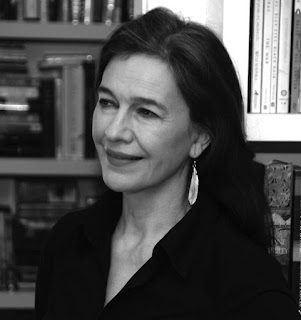
Elizabeth Woody (Courtesy Oregon Cultural Trust)

I need poetry to live sometimes. Yesterday, I went to Powell's bookstore hungry for it and found three books of poetry that I could not live without. 

One was Harper's Anthology of 20th Century Native American Poetry, the second was Luci Tapahonso's Blue Horses Rush In and the third was by my own state's poet laureate, Elizabeth Woody, Seven Hands, Seven Hearts.

I've been fortunate to meet her a few times since I've lived here in Oregon and hear her read. Like me, she's half Navajo (which I like to call Hapa Navajo) and raised in the Pacific Northwest. She is enrolled in the Warm Springs Tribe here in Oregon (her other half). I admit, reading her work I was immediately drawn to the poems about her Navajo-side. And yet, when I first moved to the Southwest (which is ostensibly my homeland) after college, the lack of water (the Rio Grande was not grand--just a trickle in the desert) was a shock to me and every night, I had intense dreams of salmon swimming in the river I grew up on, the Columbia or as she describes it in her book Chewana. The salmon of my dreams were always showing themselves in close-up with their multi-colored scales glinting as they crowded together into a writhing mass. I was experienced in my dreams fully the fear I had of living in a world without water--an environment so stark that my husband and I used to play a game of chasing rainclouds in our car out in the open desert just outside of Albuquerque. We'd park our car under a particularly dark one overhead and wait for the rain to fall on us. We'd laugh when only a few thick sandy drops would reach us as the rest evaporated in the sky above us never reaching the ground. 

So I connected deeply with her poem "In Memory of Crossing the Columbia" and I'd like to share it here:

In Memory of Crossing the Columbia
For Charlotte Edwards Pitt and Charlotte Agnes Pitt

My board and blanket were Navajo,
but my bed is inside the river.
In the beads of remembrance,
I am her body in my Father's hands.
She gave me her eyes
and the warmth of basalt.
The vertebrae of her back,
my breastplate, the sturdy
belly of mountainside.

"Pahtu," he whispered in her language.
She is the mountain of change.
She is the mountain of women 
who have lain as volcanoes 
before men.

Red, as the women much loved,
she twisted like silvery Chinook
beyond his reach.

Dancing the Woman-Salmon dance,
there is not much time to waste.


This next poem is named after the Navajo city of Chinle. My husband loved the phrase "a River woman walking in dust." This poem captures so well the experience of having ties to two very different lands and to two very different Native nations.


Chinle Summer

Loneliness for me is being the daughter of two landscapes,
distant from the horizon circling me.
The red earth completely round.
The sky a deep bowl of turquoise overhead.
Mother and father. Loneliness
rising up like thunderheads. The rain pours over
the smooth rocks into the canyon that is familiar.

This is the road that leads to my father's home.
After twenty years I stand on the threshold of his mother's hogan.
Grandmother sits in the cool dark, out of the light 
from the door and smoke hole. She talks softly
in the Diné language.

Talking to me as I grew in her warmth, my mother
lowered herself in this canyon, barefoot and unafraid.
She walked miles in high heels to church by this road
that runs alongside Canyon de Chelly.
She was a river woman walking in dust.

The Recumbent Woman whispers inside different languages.
I am one story. Beauty walked South and then North again.
Beauty sparked physical creation.

A strong and wild will draws up the land into the body.
My journey circles back, unraveling, unmaking itself
like the magnificent loom work of my grandmother's center.
My grandfather once told me, "Lizzy, I was busy singing
over there...you were here. So I came home to see you."
Continue Reading
jfkeeler
0 Comments

You Might Also Like

Thinking of Thought Woman, Leslie Marmon Silko - Poem of the Day Native American Heritage Month

Thinking of Thought Woman, Leslie Marmon Silko - Poem of the Day Native American Heritage Month


Spiderwoman/Thought Woman. Art by Jade Red Moon.
Leslie Marmon Silko is one of those writers who have contributed to my understanding of the world as a Native American woman.  Some of the passages in her novels read like poetry to me and remind me of the voice of my own Navajo mother.  In fact, writers like Silko and Paula Gunn Allen, Native women of the same generation as my mother have perspectives very similar to those she passed on to me.  

Raised in a still very traditional Navajo culture (my grandparents did not speak English and were completely traditional in both dress and worldview) she and other young Native women of her generation left their respective reservations in the 1960's and 1970's to be greeted by an America that had only recently undergone the Civil Rights Movement and in the midsts of the Women's Rights Movement.  My mother saw in this movement a great deal of her own matrilineal Navajo traditions and threw herself enthusiastically into working for the passage of the Equal Rights Amendment.  It is hard to imagine what it is like to be a young woman, to leave all you know, traditions that are clear and in your favor to enter a world where such surety does not exist.  Not as a brown woman in color conscious society, not as a woman in a society that favors men, not as a traditional Navajo in a Judeo Christian society that knows nothing about your cosmological underpinnings.  So, when she raised me in Suburbia, she took great pains to help me bridge those worlds.  

She was proud that Navajo traditions valued women and that these ideas were now being embraced by Euro-American culture.  She emphasized to me the importance of women and their role in the Navajo concept of the world and told me the stories of Changing Woman and her sister White Shell woman.  She made sure I knew my clans and the stories of my clan - a matrilineal line that stretches back to Changing Woman, herself in Navajo culture.  She told me that my clan the Kinyaani (Towering House People) were the first clan of the Navajo people and the first Kinyaani woman (my many-greats grandmother) was made my Changing Woman herself.  In the songs of my cheii (my grandfather), the chants he constantly sang I could hear the rhythms of a continuity that to this day puts me at ease.  I know things are right, even as he would start singing a chant as my masani (grandmother) lectured him about not doing the dishes the night before.  He would smooth over small mishaps and my mother explained to me that he had turned one of his songs, a riding song (songs sung for riding on horseback) into a powerful prayer.  Navajos do not pray the way European Christians do, "I want this, give me that" but it is instead an imagining of the world as they want it to be: "When I ride I will meet friendly people who will give me water and good food when I stop to talk to them, when I ride home I will have a safe and quick journey back." This is how those songs and prayers went with a tempo of confident, soothing optimism of life which is often translated as Hozho, harmony.  It is in this way that I read Silko's writing and how it speaks to me, even though, she is from another Southwestern people, the Laguna Pueblo, there is a cultural similarity that her words feed and nourish and help me navigate this strange between world we modern Native people live in.


Ceremony 
I will tell you something about stories,"
[he said] 
They aren't just entertainment. 
Don't be fooled. 
They're all we have, you see. 
All we have to fight off illness and death. 
You don't have anything 
if you don't have the stories. 
Their evil is mighty, 
but it can't stand up to our stories. 
So they try to destroy the stories, 
but the stories cannot be confused or forgotten. 
They would like that. 
They would be happy 
because we would be defenseless then.
 [He rubs his belly]
 I keep it in here,
[he said] 
Here, put your hand on it. 
See? 
It is moving. 


Ts' its' tsi' nako, Thought-Woman,
is sitting in her room
and what ever she thinks about
appears.
She thought of her sisters,
Nau' ts' ity' i and I' tcs' i,
and together they created the Universe
this world
and the four worlds below.
Thought-Woman, the spider,
named things and
as she named them
they appeared.
She is sitting in her room
thinking of a story now
I'm telling you the story
she is thinking.
Continue Reading
jfkeeler
1 Comments

You Might Also Like

Jacklight by Louise Erdrich  - Poem a Day for Native American Heritage Month

Jacklight by Louise Erdrich - Poem a Day for Native American Heritage Month


Ojiway poet, Louise Erdrich
I've been thinking about poetry and Native Americans.  I have some favorites and I thought that for the rest of Native American Heritage Month, I'd post a few.  If anyone has any they'd like to suggest please feel free to tell me about your favorite poems in the comments!

My daughter was recently reading my copy of Louise Erdrich's book of poetry Jacklight and so, this poem has been on my mind today.  

Jacklight
The same Chippewa word is used both for flirting and hunting game, while another Chippewa word connotes both using force in intercourse and also killing a bear with one’s hands.             
-R.W. Dunning (1959) Social and Economic Change Among the Northern Ojibwa

We have come to the edge of the words,
out of brown grass where we slept, unseen,
out of knotted twigs, out of leaves creaked shut,
out of hiding.

At first the light wavered, glancing over us.
Then it clenched to a fist of light that pointed,
searched out, divided us.
Each took the beams like direct blows the heart answers.
Each of us moved forward alone.

We have come to the edge of the woods,
drawn out of ourselves by this night sun,
this battery of polarized acids,
that outshines the moon.

We smell them behind it
but they are faceless, invisible.
We smell the raw steel of their gun barrels,
mink oil on leather, their tongues of sour barley.
We smell their mothers buried chin-deep in wet dirt.
We smell their fathers with scoured knuckles,
teeth cracked from hot marrow.
We smell their sisters of crushed dogwood, bruised apples,
of fractured cups and concussions of burnt hooks.

We smell their breath steaming lightly behind the jacklight.
We smell the itch underneath the caked guts on their clothes.
We smell their minds like silver hammers
cocked back, held in readiness
for the first of us to step into the open.

We have come to the edge of the woods,
out of brown grass where we slept, unseen,
out of leaves creaked shut, out of our hiding.
We have come here too long.

It is their turn now,
their turn to follow us. Listen,
they put down their equipment.
It is useless in the tall brush.
And now they take the first steps, not knowing
how deep the woods are and lightless.
How deep the woods are.

-Louise Erdrich (Turtle Mountain Chippewa)

Continue Reading
jfkeeler
0 Comments

You Might Also Like